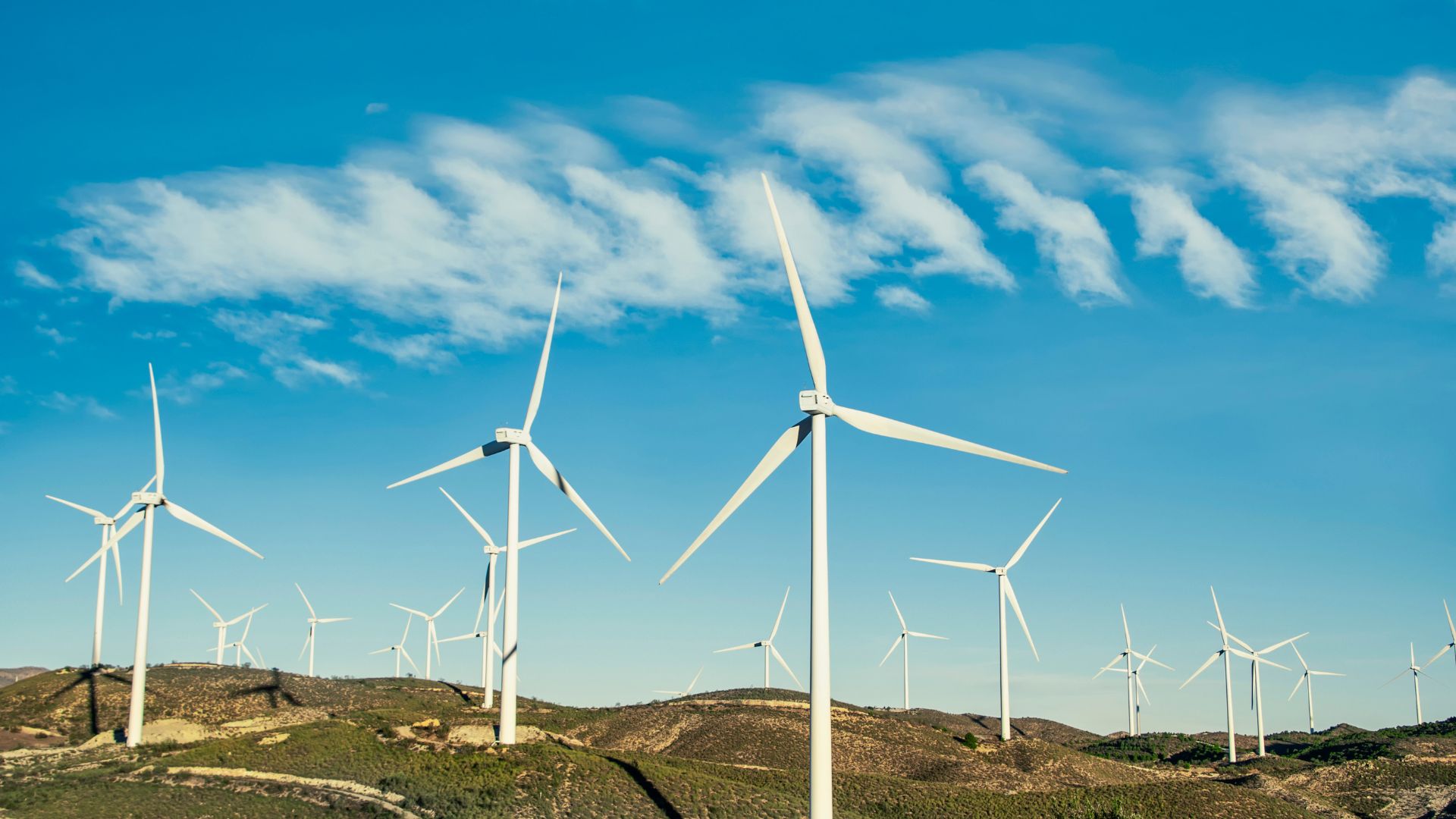
The scale differs first. Wind turbines in Aroostook County stand taller than the Statue of Liberty, each blade spanning the length of three school buses. Solar panels measure four feet by six feet, light enough for two people to carry. The work environments contrast just as starkly.
Yehuda Gittelson spent two years in northern Maine’s wind industry before shifting to solar installation in Portland. The transition involved more than geography. It represented a choice between two distinct approaches to renewable energy work, each with separate technical demands, time horizons, and daily realities.
The Wind Farm Scale
Maine operates more than 200 wind turbines across multiple counties, generating electricity at utility scale. Aroostook County hosts several major facilities, including the 148-megawatt Oakfield Wind project and the long-discussed King Pine Wind farm, which if built would double the state’s wind power capacity.
These installations represent infrastructure projects measured in years rather than weeks. Permitting processes involve environmental reviews, transmission line planning, and community negotiations. Construction employs hundreds of workers for extended periods. Once operational, the turbines require ongoing maintenance from specialized technicians.
Gittelson worked for a wind farm development company between his college graduation and his move to Portland. The position involved engineering calculations, site assessments, and permit documentation. Projects existed on paper for years before construction began, if they proceeded at all.
“You’d spend months working on designs for something that might not get approved for another two years,” he says. “Then you’d wait for financing. Then weather delays. The timeline stretched everything out.”
The work also meant extensive time in remote locations. Many promising wind sites sit on ridgelines far from population centers. Aroostook County, with its strong winds and low population density, has long been considered prime territory for wind development despite repeated project delays and cancellations.
The Solar Installation Pace
Solar work operates at fundamentally different speeds. A residential installation takes one to three days from start to finish. Commercial projects extend to weeks rather than years. Permitting requirements exist but involve city building departments rather than state environmental agencies and utility commissions.
The job locations center on where people live. Southern Maine’s populated corridor from Portland to Brunswick contains most solar installation work. Companies schedule multiple projects weekly. Crews move from site to site with trucks and equipment that fit in suburban driveways.
“With solar, you see immediate results,” Gittelson says. “Monday morning you arrive at an empty roof. Friday afternoon the system is producing power. The homeowner watches it happen.”
The technical skills differ as well. Wind turbine technicians require specialized training for electrical systems, hydraulic components, and programmable logic controllers, often delivered through post-secondary certificate programs. They work at dangerous heights, sometimes climbing 300 feet to access turbine components. Safety protocols emphasize fall protection and confined space procedures.
Solar installation draws from residential electrical work and roofing trades. The heights involved rarely exceed forty feet. Equipment remains relatively portable. The electrical systems, while requiring proper expertise, operate at scales familiar to licensed electricians. Many installers enter the field through on-the-job training rather than formal renewable energy programs.
The Job Market Reality
Employment patterns reveal why Gittelson’s transition makes pragmatic sense. The Bureau of Labor Statistics forecasts a 44 percent expansion in wind turbine technician roles over the 2021-2031 decade, representing one of the fastest-growing occupations nationally. But those jobs concentrate in specific locations where large wind facilities operate or are planned.
Maine’s wind industry employs several hundred technicians and support staff across operational facilities. New projects create construction jobs temporarily, but long-term employment remains limited to maintenance crews at existing sites. The industry’s future growth depends heavily on transmission line development and regulatory approvals that have stalled repeatedly.
Solar installation employment in Maine stands at 708 workers across 55 companies, according to the Solar Energy Industries Association. The work distributes across the state wherever homes and businesses install systems. Companies hire continuously to meet installation demand. The positions don’t require relocation to remote counties.
For someone like Gittelson, with an engineering degree and interest in hands-on technical work, solar offered more accessible entry points and greater job availability in populated areas. His mechanical engineering background translated to both fields, but solar installation required less specialized certification and provided steadier employment.
The Financial Calculation
Compensation structures differ between the two sectors. Wind turbine technicians earn median wages around $61,770 annually, according to Bureau of Labor Statistics data. The work often includes benefits packages typical of utility-scale energy operations. Travel to remote sites may come with per diem allowances. Some positions involve extended periods away from home.
Solar installers earn median wages near $48,880 annually nationally, or approximately $23.46 per hour. NABCEP-certified installers command higher wages, particularly in leadership or specialized positions. The work typically involves local travel and daily returns home. Cost of living matters more when jobs anchor to specific metropolitan areas rather than remote project sites.
Gittelson’s Portland-based position offers middle-range pay within the solar sector. His expenses include urban rent but avoid extended hotel stays or temporary housing in rural locations. The tradeoff involves lower base salary compared to wind technician work, balanced against stable location and daily routine.
The Personal Dimension
Career decisions blend practical considerations with lifestyle preferences. Gittelson describes his wind industry years as professionally valuable but socially isolating. Aroostook County offers spectacular landscapes and outdoor recreation, but limited urban amenities. Young professionals in the area often know each other through work rather than broader social networks.
Portland provides different compensations. The city hosts live music venues, restaurants, breweries, and cultural events unavailable in northern Maine towns. Professional networks extend across multiple industries. Social connections develop through activities beyond workplace relationships.
“The work itself was interesting,” Gittelson says of his wind industry experience. “But after two years I wanted to be somewhere with more happening. Portland offered that plus renewable energy jobs.”
The choice reflects broader patterns in how young professionals navigate career development. Technical skills may transfer across industries, but location preferences and lifestyle priorities influence which opportunities people pursue. Remote work has created flexibility in some fields. Energy installation remains physically tied to specific places.
The Industry Evolution
Maine’s renewable energy sector continues developing along separate tracks. Wind projects face transmission challenges, regulatory hurdles, and community opposition despite strong public support for wind power development in statewide polling. The state’s ambitious renewable energy goals depend partly on successfully building large wind facilities and connecting them to the regional grid.
Solar installation grows incrementally through distributed residential and commercial systems. Each project adds modest generating capacity but requires no major transmission infrastructure. The cumulative effect builds toward renewable energy targets through thousands of individual installations rather than a few massive projects.
Both approaches contribute to Maine’s clean energy transition. They simply operate at different scales with different workforce requirements. Gittelson’s movement from one to the other reflects personal choice within structural realities. Wind offers high-impact infrastructure projects requiring specialized skills. Solar provides accessible, distributed work tied to population centers.
Three years into solar installation, Gittelson has developed expertise in photovoltaic systems, electrical integration, and residential building science. His engineering background helps him troubleshoot complex installations. His wind industry experience provides perspective on renewable energy’s larger infrastructure requirements.
He doesn’t regret the transition, though he acknowledges tradeoffs. Wind work involved bigger projects with longer timelines. Solar delivers immediate results at smaller scale. Both matter for achieving renewable energy goals. Both require skilled workers. The question becomes which path fits individual circumstances and preferences.
For someone who wanted to leave Aroostook County, maintain technical work, and live in Portland, solar installation made sense. The renewable energy field accommodated that transition. Whether others make similar moves depends on their own calculations of professional opportunity, lifestyle priority, and where they want to build their lives while building Maine’s energy future.