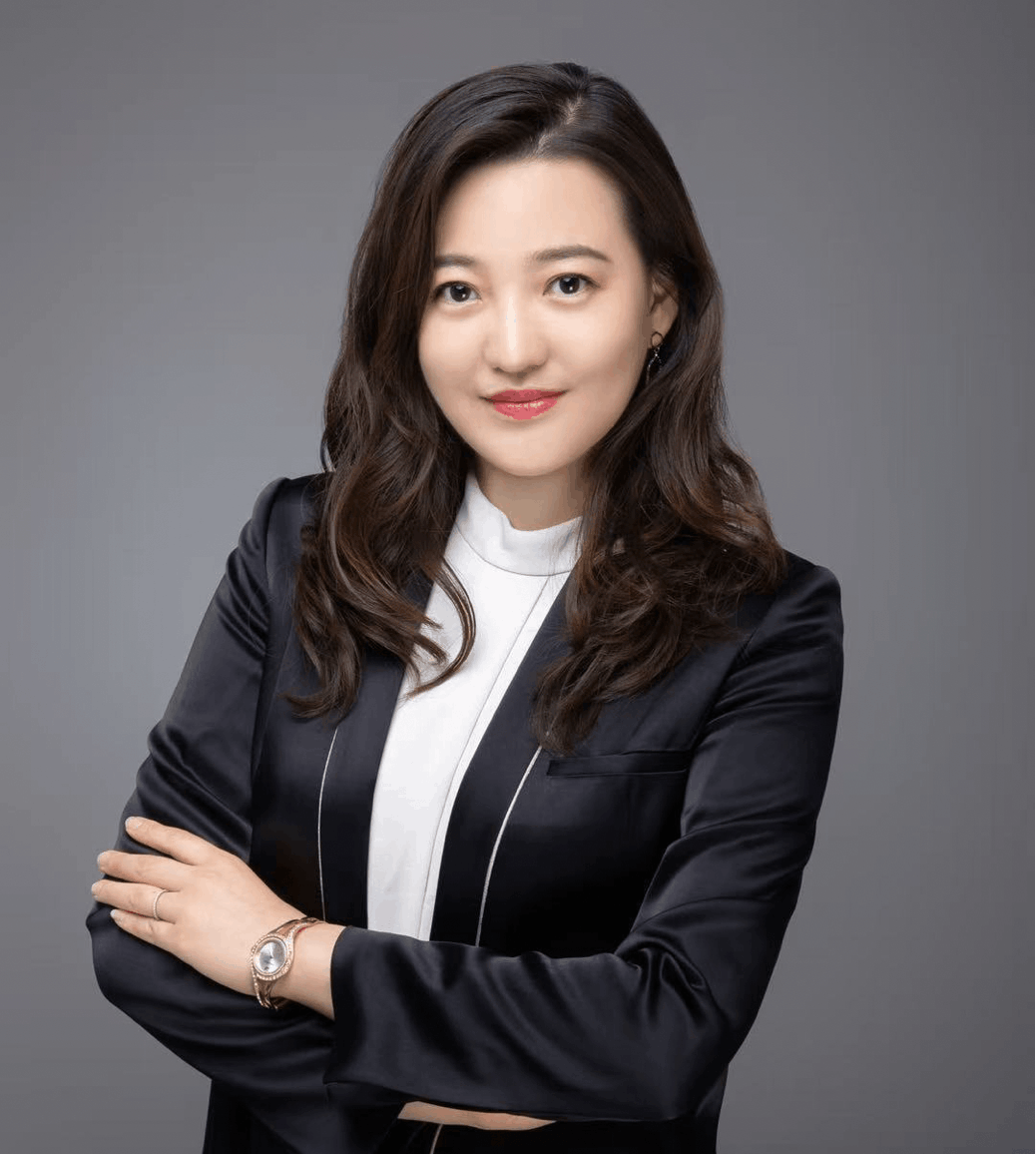
From biotechnology equity research and business development to market access and global commercialization, Yue “Caroline” Zhang has built a career around one question: how can scientific innovation be translated into value for patients across global markets.
Before Yue Zhang—also known professionally as Caroline Zhang—began leading the global development and commercialization of an innovative oncology asset, she was analyzing biotechnology companies from New York.
Early in her career, Zhang worked in biotechnology equity research at RBC Capital Markets in New York City. Working at the intersection of science, capital markets and corporate strategy gave her an investment-informed way of evaluating pharmaceutical innovation—one that looked beyond scientific promise to clinical differentiation, competitive dynamics, patient populations, development risk and the path to sustainable value.
“It gave me analytical discipline very early in my career,” Zhang said. “Interesting science is the starting point, but you also have to understand what unmet need it addresses, how differentiated it could become, what the competitive landscape looks like, and what has to happen between scientific discovery and real-world value creation.”
That analytical foundation would follow Zhang through an unusual professional trajectory: from Wall Street to business development at a multinational biopharmaceutical group, then to senior strategic consulting at a U.S.-based global life-sciences intelligence organization, and ultimately to global asset leadership at a Hong Kong-listed innovative biopharmaceutical company.
Her vantage point kept expanding—from evaluating innovation, to selecting innovation, to understanding how healthcare systems value innovation, and finally to leading the international execution required to bring innovation to patients.
Turning Investment Discipline into a Biopharma Decision Framework
When Zhang moved from capital markets into business development, she encountered a different version of the same challenge: pharmaceutical companies may see hundreds of promising opportunities, but capital, management attention and development resources are finite.
To make comparisons more systematic, she developed a weighted commercial-attractiveness assessment matrix using a five-point methodology. The framework considered corporate strategic synergy, unmet medical need, in-class and overall competition, intellectual-property duration, addressable patient population, mechanism-of-action rationale and regulatory viability.
The aim was not to reduce innovation to a single score. Rather, it was to force a multidimensional discussion in which scientific, competitive, regulatory and commercial considerations were examined together instead of allowing one attractive feature to dominate the decision.
“The matrix was useful because it made the questions repeatable,” Zhang said. “It created a common framework for comparing very different opportunities and helped us avoid evaluating an asset through only one lens.”
The methodology was subsequently used to help screen and assess more than 100 innovative opportunities. For Zhang, it marked an early transition from analyzing innovation as an investor to building management tools for evaluating innovation from inside the pharmaceutical industry.
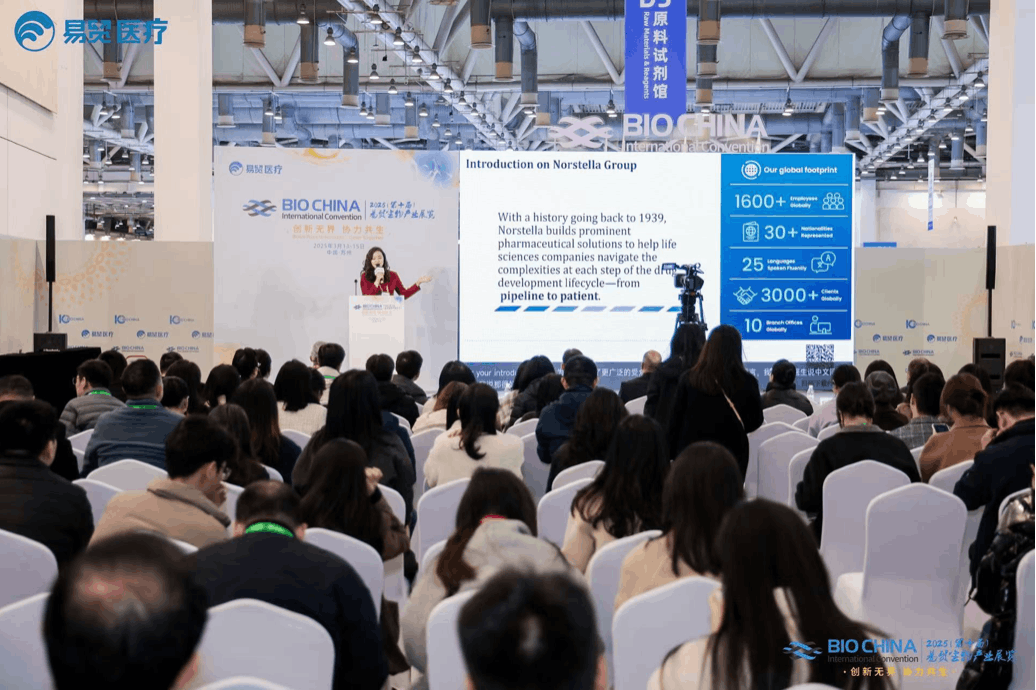
From Asset Evaluation to Healthcare-System Value
Zhang’s next career move broadened the question again. In a senior Asia-Pacific leadership role at a U.S.-based global life-sciences intelligence organization, she worked across pharmaceutical intelligence, analytics and consulting questions spanning clinical development, competitive intelligence, forecasting, market access and commercialization.
One project involved evaluating the reimbursement environment and commercial potential of an oncology therapy across five European markets. The work required understanding not only whether a medicine worked, but how evidence could be interpreted by different healthcare systems, what reimbursement barriers existed, how competition was evolving and what those factors meant for patient access and commercial potential.
“Clinical value is essential, but clinical value does not automatically become patient access,” Zhang said.
That experience reinforced a principle that would become central to her later work: between successful clinical development and a patient actually receiving a medicine lies an entire chain of strategic and operational decisions.
Leading the Whole System
Today, Zhang works at a Hong Kong-listed, innovation-driven biopharmaceutical company and describes her current responsibility as global asset leadership. The role requires connecting regulatory strategy, medical affairs, market access, commercialization, alliance management, CMC, manufacturing and supply—functions that cannot be optimized independently because decisions in one area continuously affect another.
One of the company’s major commercial assets has established an international commercialization network spanning more than 60 countries and regions through multiple strategic partnerships. As the asset’s global project leader, Zhang oversees development and commercialization across that network, coordinating cross-functional and cross-regional efforts to translate global strategy into execution.
“Operating in that environment changes the management question from ‘How do we make a deal?’ to ‘How do we make an innovation work across many different healthcare systems?’” she said.
For Zhang, global asset leadership is fundamentally about integration. A commercial forecast can affect manufacturing commitments and supply planning. A local regulatory requirement can influence packaging and launch timing. Questions raised by physicians can reveal evidence gaps relevant to several markets. The challenge is to recognize those interdependencies early enough to act on them.
Partnerships as a Global Learning Network
International partners are central to that model. Regional partners bring local knowledge of regulators, reimbursement systems, physicians, patient pathways and commercial environments, while the originator brings deep knowledge of the medicine, its clinical-development history, manufacturing characteristics and broader global strategy.
Zhang sees the strongest partnerships not as simple licensing handovers, but as mechanisms for value co-creation. Scientific and technical knowledge moves toward local markets, while physician feedback, payer insights, regulatory intelligence and commercial learning move back. When that information is captured and shared effectively, she argues, a network of regional partnerships can become a global learning network.
“The objective is not to do everything yourself,” Zhang said. “The objective is to retain enough strategic visibility and internal capability to ask the right questions, evaluate important decisions and connect learning across markets.”
Connecting the Full Chain
Looking back, Zhang sees a consistent thread through roles that might otherwise appear quite different. Equity research taught her how to evaluate innovation. Business development taught her how to select and prioritize it. Healthcare intelligence and consulting showed her how healthcare systems value it. Global asset leadership has required her to orchestrate the people, partners and functions needed to translate innovation into international execution.
That progression has shaped an end-to-end view of biopharma globalization—one in which scientific innovation is only the beginning, and the ultimate test is whether a medicine can successfully navigate healthcare systems and reach the patients who can benefit.
“The value of a medicine is not fully realized when an investment thesis is written, when a licensing agreement is signed, or even when regulatory approval is obtained,” Zhang said. “It is realized when scientific innovation successfully travels through healthcare systems and reaches the patients who can benefit from it. That is the full chain I have spent my career learning to connect.”