Solar and wind are expanding at record speed. Yet natural gas is not disappearing from the global power system. In 2025, renewable power generation virtually matched coal globally, while natural-gas-fired generation still increased.
The contradiction is important for investors: the energy transition is not simply replacing one power source with another. It is creating a larger and more complicated electricity system in which gas can provide something intermittent renewables cannot always provide on demand dispatchable power.
Renewables Are Growing Faster But Electricity Demand Is Growing Too
The first reason gas remains relevant is simple: the world is consuming more electricity.
Global electricity generation increased by more than 850 TWh in 2025, while electricity demand grew by around 3%. Renewables and nuclear together generated more additional electricity than the total increase in global generation, demonstrating how quickly low-emission sources are expanding. Renewable generation alone accounted for 34% of global electricity in 2025, up from 32% in 2024 and 23% a decade earlier.
Solar was particularly important. Global solar PV capacity additions helped renewables achieve another record year, with total renewable capacity additions reaching about 800 GW in 2025, around three-quarters of which came from solar.
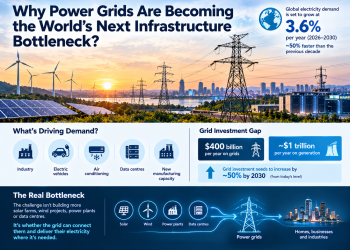
But electricity demand is expanding alongside this capacity. Data centres, industrial electrification, air conditioning, electric vehicles and manufacturing are all increasing the need for reliable electricity.
That changes the gas equation. Gas does not need to beat solar or wind on annual generation growth to remain economically important. It needs to fill the periods when demand is high and renewable output is insufficient.
Gas Is Becoming the Flexibility Layer
Solar panels generate electricity when the sun is available. Wind turbines generate when wind conditions are favourable. Electricity demand, however, does not follow either schedule.
This creates a flexibility problem.
Battery storage is expanding rapidly: global battery-storage additions increased by around 40% in 2025, reaching almost 110 GW of new capacity. But storage is still being built alongside generation rather than replacing every form of dispatchable power.
Natural gas-fired plants can ramp output when electricity demand rises or renewable generation falls. This makes them particularly valuable in systems with high shares of variable renewable generation.
Europe provides a useful example. Gas-fired electricity generation increased by nearly 8% in 2025, partly because electricity demand was higher while wind and hydropower production were weaker. In the same year, the European Union’s wind and solar share reached 30%, exceeding fossil fuels for the first time.
The two trends can therefore occur simultaneously: more renewables can create more need for flexible generation.
The Data-Centre Boom Is Changing the Gas Story
The next major driver is electricity demand from data centres.
AI infrastructure is particularly important because large data centres require huge amounts of electricity and need extremely high reliability. Grid connections and transmission infrastructure can take years to develop, while companies want computing capacity much sooner.
This is creating an opening for gas-fired generation.
GE Vernova, one of the world’s largest gas-turbine manufacturers, explicitly identifies data centres as a significant future driver of gas-turbine demand. The company said its gas equipment backlog and slot reservations reached 83 GW at the end of 2025, up from 62 GW, and by the second quarter of 2026 had risen further to 116 GW. GE Vernova said it expects at least 125 GW under contract by the end of 2026.
The company is also increasing annual gas-turbine production capacity from around 20 GW in 2026 toward 24 GW in 2028 and 30 GW in 2030.
This does not mean data centres are abandoning renewable electricity. Instead, it highlights the value of having firm generation available while grids, transmission and renewable projects catch up with rapidly rising demand.
LNG Is Expanding the Reach of Natural Gas
Gas is also benefiting from a major expansion in LNG infrastructure.
The IEA expects global LNG supply growth to accelerate sharply in 2026, with LNG production forecast to rise by more than 7%, or over 40 bcm. North America is expected to account for more than 85% of the increase.
The investment is already visible in company numbers.
Cheniere Energy reported $19.98 billion of total revenue in 2025, compared with $15.70 billion in 2024. Its LNG revenues increased to $19.44 billion, while volumes delivered as LNG revenue increased from 2,349 TBtu to 2,438 TBtu. Cheniere also has approximately 45 million tonnes per year of LNG production capacity operating and more than 10 million tonnes per year under construction.
This matters because LNG makes natural gas increasingly transportable between regions. Countries without large domestic gas resources can import LNG and use it for power generation, industry and heating.
That gives gas a global supply chain that is becoming more flexible even as individual markets increasingly add renewable capacity.
But Gas Is Not Winning Everywhere
The gas story has an important limitation: renewables are already displacing gas in some markets.
The European Union is one of the clearest examples. The IEA expects European gas demand to decline by more than 2% in 2026, with strong renewable generation and higher gas prices reducing gas consumption.
India is another example. Natural-gas consumption fell 3.5% in 2025, while gas demand from power generation fell by almost 10%, according to the IEA. Strong renewable generation was one of the factors limiting gas-fired power use.
The United States also demonstrates the price sensitivity of gas. In 2025, U.S. gas demand from the power sector fell around 3.5%, while higher natural-gas prices encouraged some switching from gas to coal.
So the thesis is not that gas consumption will rise indefinitely. Gas remains exposed to fuel prices, renewable buildout, nuclear availability, storage deployment and grid expansion.
The Real Competition Is Changing
The most important shift is that gas is no longer competing only against coal.
It is increasingly competing against a combination of solar + wind + batteries + transmission + nuclear + demand response.
That makes the economics more complicated.
In 2025, natural gas accounted for 21% of global electricity generation, making it the second-largest generation source behind coal. Renewables accounted for 34%, while wind and solar together reached 17%.
At the same time, gas-fired generation still increased approximately 0.5% globally in 2025.
That is the key number.
Gas does not need to maintain its historical growth rate to remain strategically important. Even with renewables expanding rapidly, electricity demand is growing fast enough in several markets to leave room for gas particularly where reliability, flexibility and speed of deployment matter.
The energy transition is therefore producing a more diversified power system rather than an immediate one-for-one replacement of fossil fuels.
What This Means for Investors?
The investment opportunity around gas is moving away from the old thesis of simply “more gas demand.”
The more interesting businesses may be those positioned around flexibility, LNG infrastructure, gas turbines and power-system reliability.
GE Vernova is an example. Its 2025 revenue was $38.07 billion, up from $34.94 billion in 2024, while its total backlog reached about $150 billion. Its gas-turbine installed base exceeds 7,000 units, creating a long-term services opportunity in addition to new equipment sales.
Cheniere represents a different part of the value chain: LNG production and exports. Its 2025 LNG revenues were $19.44 billion, with 2,438 TBtu of LNG volumes delivered as LNG revenue.
The distinction matters. A company does not necessarily need global gas consumption to surge to benefit from the changing power market. Turbine manufacturers can benefit from new capacity and replacement demand, while LNG companies can benefit from international gas trade and long-term contracts.
The broader investment question is therefore becoming less about “gas versus renewables” and more about which parts of the electricity system will be needed regardless of which technology ultimately supplies the incremental power.
Conclusion
Natural gas is not surviving because the renewable transition has failed. It is surviving partly because the transition itself is creating a much larger and more demanding electricity system.
Solar and wind are supplying an increasing share of global power. Batteries are scaling rapidly. Nuclear generation is recovering. Yet electricity demand is also accelerating, particularly from data centres, industrialisation and electrification.
That leaves natural gas with a specific role: providing dispatchable electricity when renewable output does not line up with demand, while LNG gives gas a global trading network.
The numbers already show the transition happening in parallel. Renewables are expanding faster than ever, but global gas-fired generation still grew in 2025. The future power market is therefore unlikely to be defined simply by the disappearance of gas. It will be defined by how quickly renewables, storage, grids, nuclear and flexible generation can be built together.
The real question for investors is not whether renewables will grow. They will. It is how much reliable power the world will need alongside them and which companies will supply it.