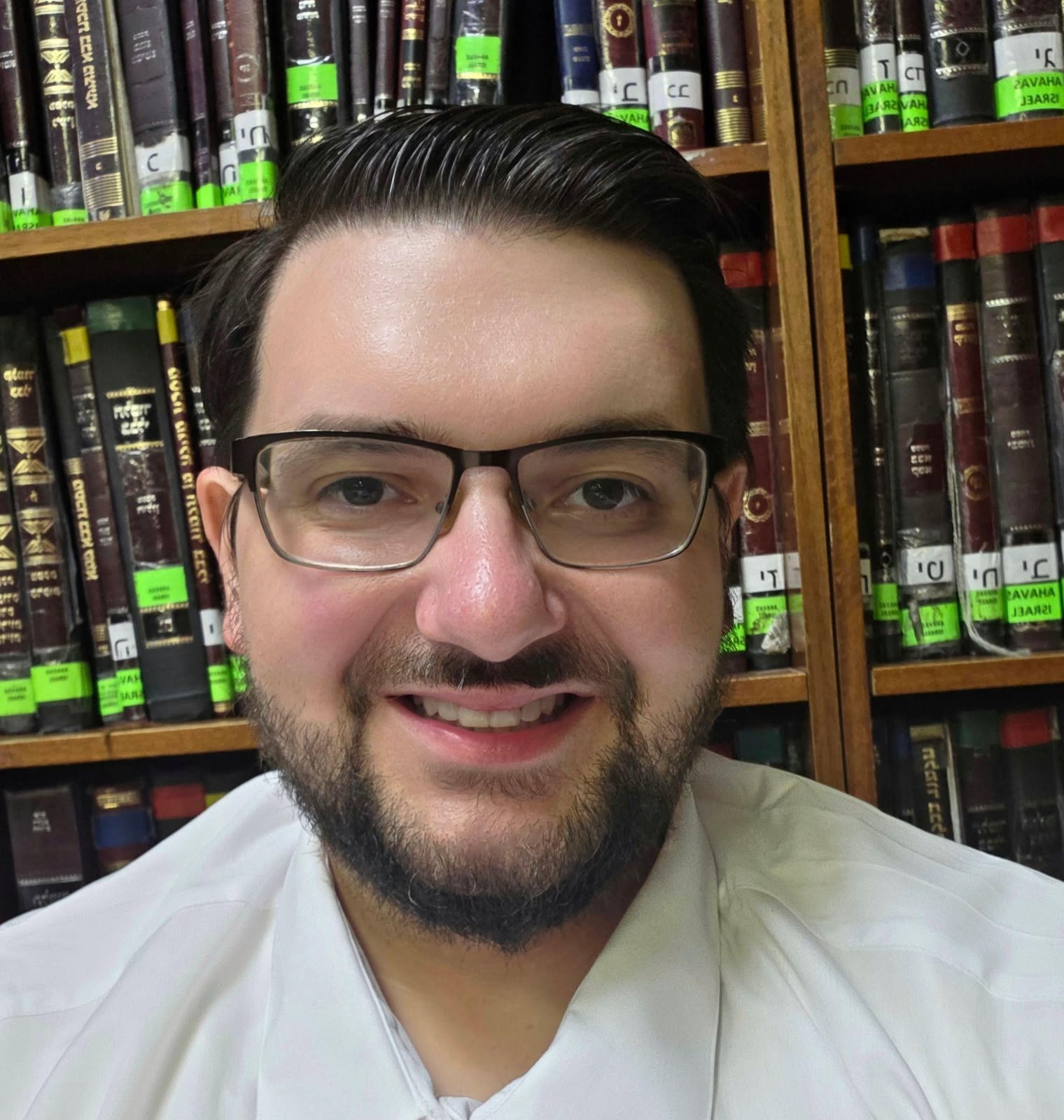
Photo courtesy of Daniel Sayani
Rabbi Daniel Sayani’s journey to rabbinic leadership did not follow the typical pattern. He was not raised in an observant Jewish home, did not attend Jewish day school and did not grow up immersed in the texts and traditions that most rabbis encounter from childhood. His serious engagement with Judaism began only in adulthood, following a period of personal searching that led him to explore religious life more deeply.
After converting to Judaism through a formal process supervised by a rabbinic court, Sayani made a decision that surprised many who knew him. Rather than simply joining a congregation and participating as a lay member, he committed to intensive study with the goal of eventual ordination. It was an audacious choice for someone who had entered the tradition as an adult and who faced years of catching up on material that others had been studying since childhood.
“I knew I was starting from behind,” Sayani recalled. “But I also felt that if I was going to take this tradition seriously, I needed to understand it at the deepest level available to me. That meant committing to the same training that people who were born into observant families undergo.“
First Ordination and Foundational Training
Sayani’s first rabbinic credential came from Yeshivas Ohr Kedoshim d’Biala in Brooklyn, a school associated with the Biala Hasidic group. The program, which led to ordination known as Rav uManhig and Moreh Horaah, emphasized both legal competence and spiritual leadership. Students were expected to master core areas of Jewish law while also developing the pastoral skills needed to guide communities.
The training was demanding. Days began early with prayer and continued with long hours of text study, often in pairs or small groups. The pedagogy relied on intense analysis of Talmudic passages and later legal codes, with students expected to parse arguments, identify underlying principles and apply reasoning to novel situations. Written exams and oral examinations tested both memory and analytical ability.
“The expectation was that you did not simply memorize isolated rulings,” Sayani explained. “You had to understand how legal and ethical principles developed over centuries, how different authorities disagreed and why. You had to be able to walk into a real-world situation and apply that knowledge responsibly.“
The Biala community is known for a particular theological emphasis on “mevaser tov,” seeking and announcing good in people and situations. This principle influenced how Sayani approached his studies and later his rabbinic work. He was taught to view legal decisions not as abstract exercises but as opportunities to support people in living meaningful lives.
Advanced Study in Jerusalem
Following his initial ordination, Sayani pursued a degree in Judaic Studies at Yeshivas Bircas HaTorah in Jerusalem. The program focused on Talmud and Jewish thought, offering a curriculum designed for students who already had strong foundational knowledge and wanted to deepen their expertise.
Living in Jerusalem placed Sayani in an environment saturated with Jewish learning. He spent long hours in study halls alongside scholars from around the world, engaged in debates that stretched late into the night and attended lectures by leading authorities. The immersive environment accelerated his development and exposed him to a range of interpretive approaches.
The degree requirements included mastery of multiple Talmudic tractates and familiarity with major works of Jewish philosophy and ethics. Students underwent rigorous oral examinations in which they were questioned on intricate legal discussions and expected to defend their interpretations. Sayani recalls the exams as intellectually exhausting but ultimately rewarding.
“There is something transformative about being questioned intensely on material you have spent months or years studying,” he said. “It forces you to own the knowledge in a way that passive reading never does.“
Specialization in Practical Law
Recognizing that many aspects of rabbinic work require specialized training beyond general textual knowledge, Sayani pursued additional certification through Machon Smicha. This program focuses on practical legal areas such as Sabbath observance and dietary law, training rabbis to issue authoritative rulings on questions that arise in everyday life.
The curriculum covered complex topics including the laws of food mixtures, dairy and meat separation, and the permissibility of various activities on the Sabbath. Students analyzed case studies drawn from real inquiries submitted to rabbinic authorities, learning to identify relevant precedents and apply them to contemporary circumstances.
Sayani’s ordination in these areas was signed by senior rabbinic figures, including Rabbi Chaim Finkelstein, head of the Yeshiva L’Rabbonus in Pretoria, South Africa. The endorsement from recognized authorities gave Sayani standing within networks of Orthodox rabbis and signaled that he had met high standards of competence.
“When people ask you for guidance on whether something is permitted or forbidden, they are placing enormous trust in you,” Sayani noted. “The training I received was designed to ensure I could handle that responsibility with both knowledge and humility.“
Certification as a Wedding Officiant
Sayani’s most recent credential came in 2024, when he completed certification as a mesader kiddushin, authorizing him to officiate at Jewish weddings and oversee the preparation of marriage contracts. This specialized training addressed both the legal intricacies of Jewish marriage law and the pastoral skills needed to work with couples during an emotionally charged period.
The certification process included study of the ketubah, the traditional marriage contract, and the procedures for conducting a wedding ceremony in accordance with Jewish law. Students learned how to address complications such as previous marriages, conversions and situations where couples might face challenges meeting traditional requirements.
Sayani’s certification was endorsed by several prominent rabbinic authorities, including Rabbi Dovid Lau, a former Ashkenazi chief rabbi of Israel, and Rabbi Yehoram Ulman, a senior rabbinic judge in Sydney, Australia. These endorsements reflected the international scope of contemporary rabbinic training networks and added to Sayani’s credibility when working with couples who might be unfamiliar with his background.
The Value of Layered Credentials
Sayani’s pursuit of multiple ordinations and certifications reflects a broader trend among contemporary rabbis who seek to demonstrate competence across several domains. While a single ordination might suffice for basic congregational work, specialized credentials signal deeper expertise and can open opportunities in areas such as education, supervision and consulting.
He views the layered approach as essential for effective leadership. “People who seek rabbinic guidance deserve someone who has been tested rigorously and certified by recognized authorities,” he said. “The credentials are not about ego. They are about accountability.”
At the same time, Sayani acknowledges that formal training has limits. “You can study texts for years, but until you sit with someone who is grieving or confused or struggling, you have not really learned how to be a rabbi,” he said. “The credentials give you tools. Experience teaches you how to use them.“