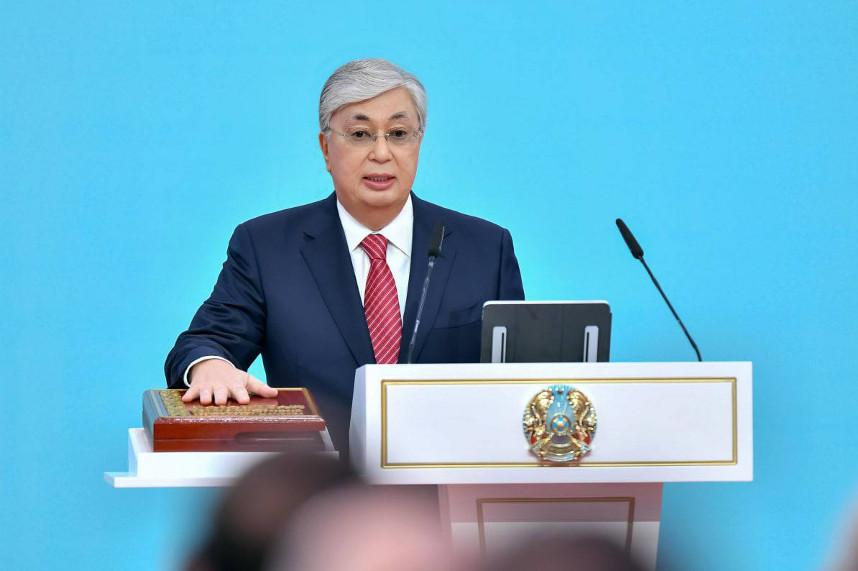
This month saw the seventh presidential election in the three-decade-long history of independent Kazakhstan, yet perhaps this was the most important vote. Against a background of the ongoing war in Ukraine, and amidst wider regional turmoil, the snap elections were seen as a referendum – not just on President Tokayev’s ability to lead the country on such a tumultuous world stage, but on the widespread democratic reforms he had instigated. The result was a resounding vote of confidence, but it is worth understanding why.
Against all odds
It is less than twelve months since Kazakhstan was upended by protests which turned violent. Inquiry into the January riots indicates that the start of the events was a popular civil protest about the rising cost of energy prices. However, all indications show that these protests were hijacked by entities and groups with far more nefarious intentions. They introduced live weapons and violent attacks on the streets – the results of which left more than 230 dead and prompted a severe response from the security services.
The country – still shaking off the shackles of decades of Soviet Rule – took on the task of bringing the perpetrators to justice and exonerating the innocents caught up – while holding a mirror up to the security services and examining how the matter would have been better handled. The outcome was a hard-learned lesson of listening to the grievances of the Kazakh people and implementing their aspirations, hopes, and desires accordingly. The head of state, President Kassym-Jomart Tokayev, noted that he heard those voices loud and clear, across the world’s 9th largest country, located in Central Asia between Russia and China, not far from Afghanistan and Iran.
In response to these events, and out of an understanding of the need to restore the Kazakh people’s trust in the state’s authorities, Tokayev unleashed a barrage of constitutional reforms aimed at improving democratization, strengthening the parliament, the judiciary, and the civil society, and vastly upgrading human rights provisions in all fields. The reforms reduced barriers to the formation of new political parties, created a new constitutional court, strengthened the parliament and the district governors, demolished the death penalty, established an independent Human Rights Commissioner, improved the government’s accountability, and decreases the President’s powers while limiting his rule to a single seven-year term without the right to be re-elected.
indeed, perhaps most notably, at the epicenter of these democratic reforms, were dramatic reductions and new limitations to the office of the president. Tokayev very literally rolled back his powers, introducing the demand for sitting presidents to renounce any political party membership, limiting voluntarily his influence on the makeup of the parliament, and banning family members of the president – as well as family members of other senior officials – from holding public office or being appointed to positions in government companies.
The message is clear. Nepotism is dead, long live the New Fair Kazakhstan.
Securing national interests
But the refurbishments and overhauling repairs to the nation’s governance were not limited to the domestic arena. In the fields of foreign policy and national security, President Tokayev’s administration has seen unprecedented efforts to enhance Kazakhstan’s geopolitical status, protect the country’s independence and sovereignty, and promote its national interests.
Not only has there been almost relentless traffic of senior international policymakers to Astana in recent months – from both the East and the West – Kazakhstan has led efforts in Central Asia to increase cooperation and partnership in economy, security, and more. The need to be sure that this region is strong, stable, and able to peacefully secure its sovereignty and independence – is a vital interest for the region itself, and for the international community. Europe and the U.S. share great fear of such an important trading partner and hydrocarbons and metals supplier, as Kazakhstan, falling nowadays into Moscow’s iron grip.
For Kazakhstan, the balancing act of abiding by international sanctions with Russia – which shares a 7,400 km land border with Kazakhstan and trditionally is Kazakhstan’s largest trading partner – and continuing to build ties with the West, offering assistance to refugees fleeing the conflict, facing the threat of instability in Afghanistan – has certainly thrown the nation into the maelstrom of international deliberations. Unlike his predecessors, Tokayev stood on the world stage to speak about Kazakhstan’s independent, neutral, and balanced approach to the international agenda.
Wide public support
Such dramatic changes at home and abroad, in a truly democratic fashion, require democratic approval. So earlier than was required of him, President Tokayev returned the mandate to govern Kazakhstan to the people of Kazakhstan and called a snap election which was held earlier this week.
A total of six candidates contested the election – in which two of them were women, quite an unprecedented phenomenon in this part of the world – all six of them from different parts of Kazakhstan’s society, offering different political perspectives. Yet, moreover, the ballot offered a free-will option for voters to select, “none of the above”, meaning a protest vote against all candidates. In other words, citizens were offered the chance to be part of the democratic process, to take part in the elections, yet still to say, “I do not support any of the candidates”.
Nevertheless, the turnout was high. According to the Central Election Committee – which operated with the oversight of 641 internationally accredited observers and indeed the scrutiny of more than 250 foreign journalists who traveled to cover the election – 8,300,046 citizens cast their ballots, marking an electoral turnout of 69.44%. Of those, the incumbent president, Kassym-Jomart-Tokayev, received more than 81% of the vote. The “against all” option scored 5.8%.
The current Presidential election result – as resounding as it was – carries with it even greater optimism, as looking back to 5 June 2022, the day of the nationwide referendum on proposed 33 democratic amendments to Kazakhstan’s constitution. Just five months before the Kazakh people supported overwhelmingly Tokayev’s leadership at the Presidential election polls – more than 77% of the voters in the constitutional referendum (the turnout was 68%) approved Tokayev’s democratic reform. These consecutive similar voting results, clearly demonstrate the progress in implementing the democratic changes and prove that Tokayev’s sweeping reforms are being positively viewed and widely approved by the Kazakh public.
A mark in history
Given the unprecedented level of democratic change in Kazakhstan, during the last 10 months, and the premature call to vote, along with the high level of participation and engagement in the polls, it is fair to assess that the Presidential election results indicate tremendous civil approval of both Tokayev’s domestic reforms and his multi-vector foreign policies. Given the instability in the region and the global crisis, this is a huge achievement for Tokayev, ratifying his unequivocal leadership.
However, Tokayev’s path to the creation of a New Modern Kazakhstan is far from over. In general, it can be stated that the first stage of a large electoral cycle has ended successfully. The next stage is a parliamentary election, planned to take place in 2023. Meanwhile, the results of the 20 November 2022 Presidential election reflect the will of the people, and especially the direction they want the country to go – clearly towards democratization, decentralization, and modernization.
69 years old Kassym-Jomart Tokayev has seven years to meet these promises, and make a mark in history as the great reformer of Kazakhstan and Central Asia.