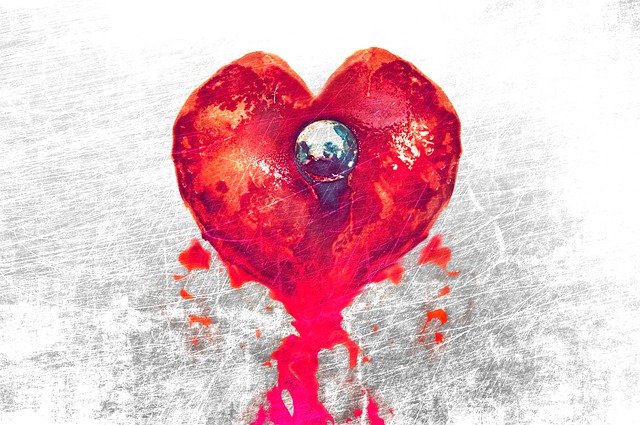
Blood is a vital component in almost every aspect of our lives. Our bodies need it to survive, and we use it to fight infections and diseases. In art, blood is used as an artistic medium and a symbol for various things – war, death, violence, sex, birth, life, etc. Artists have used it throughout history, going back to the ancient Egyptians, painted with human blood from sacrificial victims. The Greeks also employed it in their works, including their famous frescoes at Delphi, still preserved today. However, it was not until the Renaissance that painting with blood became common again. Leonardo da Vinci (1452-1519) produced several paintings using human blood as his primary paint medium, while Michelangelo (1475-1564), one of the greatest sculptors and painters, used blood extensively in many of his sculptures.
It should be pointed out that different types of blood are used to create this type of artwork. There is animal blood, such as calf’s or goat’s blood. These are typically used for religious paintings, where they were often mixed with milk or urine to make them more palatable. Human blood is what most people think of when discussing “blood art” because it is quite rare outside of medical applications. However, the artist must be careful about choosing the right type for their project. Different blood types have different characteristics; some can be very thick and hard to work with, others tend to run very easily and stain badly.
One thing to consider when mixing the blood up is the color of the finished product. Some colors will turn out more vibrant than others, but you may find that certain pigments bleed through other pigments and create unexpected results. You should keep this in mind before mixing the colors. Also, since it’s possible to mix the blood with other substances, you may want to try adding a little bit of honey or glycerin to thin it out. As long as you’re careful about these things, you shouldn’t have any trouble getting the desired result.
History of Blood Art
To begin, let’s look at the historical context surrounding this unique form of art. Many people assume that the practice originated in the Middle Ages, around the same time period as the invention of the camera obscura. However, the first known use of blood in paintings dates back to the ancient Egyptians. They would put the blood of animals on their temples and idols. Later, during the reign of Pharaoh Amenhotep III (1392-1357 BC), the pharaoh commissioned the building of the great temple of Karnak.
One of the most famous statues in the entire temple complex is the “Great Hymn of Re,” which was made entirely out of human blood. At its base, it consists of five separate panels representing the creation of the universe, each panel having a different color of blood. This was done to emphasize the role that blood plays in the entire process of creation. The pharaoh’s son, Akhenamun, took the idea one step further by creating a massive statue of himself, also made of human blood.
In later years, the ancient Egyptian tradition of using blood in their art continued. Between the 10th and 17th centuries AD, the Church forbade many materials besides precious metals and stones in its artwork. This meant that pigments could no longer be used, so artists resorted to painting with natural paints like egg yolk, honey, and even crushed red peppers. This led to a resurgence in blood as a medium, and many artists experimented with it. It was particularly popular among Italian and French painters, especially in France during the Renaissance period.
During this time, blood was used in several different ways. For example, it could be used as a painting medium, sometimes combined with eggs, water, and wine. It was commonly used as a symbolic representation of death, pain, and suffering. This makes sense, given that it was used in religious ceremonies. For instance, the famous frescoes at Delphi, Greece, depict scenes of warfare, torture, and sacrifice, all of which were believed to have taken place on the sacred hill. Since many of the depictions of these events involved the spilling of blood, this makes perfect sense. On top of that, it was often depicted as a sign of virtue, or even nobility, because it represented the sacrifices that the gods demanded of their followers.
The use of blood by artists continued into the 18th century, although it became less prominent after that. Oil paints and other synthetic materials largely replaced it. Blood art rarely reappears in modern times, but there are some exceptions. A few notable examples include the painting created by Pablo Picasso entitled Les Demoiselles d’Avignon. This painting is a symbolist work that depicts three women in the nude, accompanied by various objects related to the piece’s theme. It is extremely detailed and includes multiple layers of paint and numerous symbolic elements.
Blood Art Today
Nowadays, blood art does not appear nearly as frequently as in previous centuries. However, there are still a few artists who continue to employ it. Modern artists have found other methods of expressing themselves with blood, such as using it as a coloring n;= agent in acrylic paints. In addition to this, some artists create pieces that incorporate blood as part of the overall composition of their work.
One example is the American artist John Chamberlain, who used blood as a major component in many sculptures. Another example is the famous Mexican painter Frida Kahlo, who used her blood as a brush in many of her paintings. Contemporary artist Cory DeAn Cowley is an American author, artist, and poet. Her business C.D.C. Works operates out of Delray Beach, FL, and specializes in graphic horror novels and equally horrific art pieces.
Cory created the album artwork for Heads for the Dead and Aiwass. She will also be performing on stage at Norway’s Inferno Festival with the band Order. Cory is mostly known in the horror community as intense, realistic, and hard to stomach since she uses her own blood, fluids, and other things such as raw animal parts, insects, etc., to create her art.
Cory has been at the forefront to get this art form rescued, marketed, and accessible to audience. The reality of the art often gives people an insight to the true meaning of life. “I enjoy showing the aspects of decay to emphasize the importance of life.” says Cory.
Cory is one of the few artists that actually pushes boundaries and compels viewers to experience feelings they just wouldn’t normally feel. She believes that this is crucial since so few individuals in our culture are willing to experience any emotion other than happiness.
Final Words
Even though blood art does not seem nearly as popular nowadays, it remains an interesting and important topic of study. Cory with her exceptional and unique paintings and sculptures is reviving the art and helping people learn about it. Perhaps one day, people will once again embrace the use of blood as a medium, just like they did over 2000 years ago. Until then, we can only speculate on how it might be used in the future.