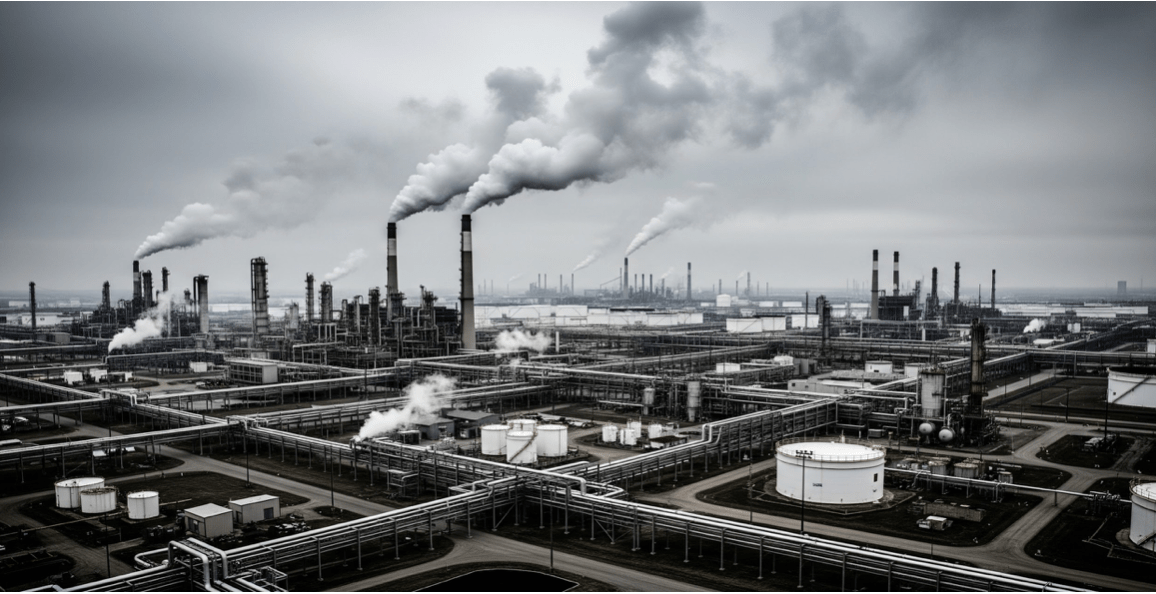
The EPA devised the OOOOb rule to apply certain environmental standards to several industries. This comprehensive methane rule is more than yet another compliance obligation; it is a watershed moment in the climate change fight, an engine for technology innovation, and an example for responsible 21st-century industrial practice. To see why OOOOb is relevant, it will help to look at its manifold relevance on environmental, economic, and social fronts.
Climate Change Imperative: Addressing the Methane Challenge
OOOOb addresses one of the biggest environmental crises of the era. Lowering methane emissions, as one of the most highly effective greenhouse gases, has developed as one of the most vital techniques for managing climate change and achieving an equitable energy future. Nothing less is on the line: a potent greenhouse gas is critical for climate change mitigation. Oil and natural gas activities are the greatest single-industry sector for methane pollution in the United States, so the industry must change to meet national and global climate goals.
Methane’s climate impact is particularly acute due to its potency. While it doesn’t persist in the atmosphere as long as carbon dioxide, methane is significantly more effective at trapping heat in the short term. This means that reducing methane emissions can provide relatively rapid climate benefits, a critical consideration as the world races to limit global temperature increases. OOOOb’s comprehensive approach to methane reduction across new, modified, and reconstructed facilities ensures that the industry’s future growth aligns with climate objectives rather than undermining them.
The measure will concern assets constructed after the date of December 2022, such that new investments in assets will incorporate the best environmental requirements up to the design level, so as not to create new methane pollution sources that will endure for decades.
Public Health as Environmental Justice
The importance of OOOOb extends beyond climate considerations to direct impacts on human health and environmental justice. Oil and gas operations, particularly those in proximity to communities, can significantly affect local air quality. Methane emissions often occur alongside other harmful pollutants, including volatile organic compounds (VOCs) and hazardous air pollutants such as benzene.
The rule’s emphasis on enhanced monitoring and rapid response to super-emitter events with emissions of around 100 kg/hr. Methane or greater provides critical protection for communities living near oil and gas operations. The Methane Super Emitter Program’s requirement for investigation within 5 calendar days and corrective action within 10 calendar days ensures that significant emission events are addressed swiftly, minimizing exposure risks.
In addition, the program’s public disclosure element, whereby notifications are accessible through EPA’s portal, yet with initial confidentiality for the operator, establishes accountability mechanisms that advantage communities affected.
Economic Implications and Market Transformation
OOOOb’s economic significance runs on several fronts, reorganizing market relations and investment traffic in the energy market. Implementation costs by EPA for 2025-2027, estimated at over $183 million a year are an enormous economic investment, but the numbers alone cannot give the complete picture.
The rule is stimulating huge investment in environmental technology infrastructure that goes far beyond the costs of compliance. Firms are installing sophisticated monitoring technologies, such as continuous emissions monitoring systems, satellite-transmitted detection, and automated inspection systems.
The alternative technologies pathway of the rule is especially relevant, enabling operators to deploy technology-based approaches instead of less productive labor-intensive strategies.
In addition, OOOOb is building new sources of competitive advantage. Methane leaders are emerging as ESG leaders, potentially appealing to environmentally oriented stakeholders for investment purposes and entering capital markets that increasingly place environmental performance high on their agenda.
Shree Chatterjee, a senior data professional, has been key in advancing OOOOb’s goals through her expertise in environmental data analytics. She created a streamlined GHG emissions reporting process under EPA Subpart W, enhancing precision and diminishing inefficiencies. Her interactive BI dashboards for air quality, VOC rules, and OOOOb compliance support real-time monitoring and faster decision-making. By constructing emissions data models integrating sources like stationary engines and pneumatic devices, she provides accurate, scalable compliance tracking. Chatterjee’s automation of workflows for NM CDR, PA VOC, and AEI_PA_OGRE reporting minimizes errors and accelerates submissions. Her tools, including compressor reliability and fugitive emissions monitoring systems, improve midstream operations’ efficiency and sustainability. By using advanced technologies to complex regulatory requirements, she not only guarantees precise environmental monitoring but also facilitates her organization to lead in sustainability practices. Her work has national and international implications, supporting U.S. climate goals and strengthening industry standards.
Her original contributions include the development of GHG emissions dashboards, which are designed and deployed dashboards for real-time monitoring of greenhouse gas emissions, assuring alignment with growing EPA regulations. Another contribution is the integration of regulatory frameworks into BI Systems, which are implemented systems that turn complex regulations into actionable insights, making better decision-making and operational efficiency. Also, she has assisted with streamlining compliance processes that consisted of optimized reporting for Subpart W, OOOOb, PA VOC, and other regulations, decreasing errors and speeding up submission timelines. All these contributions have advanced industry practices and influenced broader regulatory approaches, illustrating leadership beyond her immediate organization.
Professionals like Chatterjee are vital to OOOOb’s success, aligning regulatory requirements with practical undertakings. Her absence would create significant voids like regulatory compliance delays, risking EPA penalties; operational inefficiencies with higher costs and misreported emissions; and slowed creation, leaving businesses reliant on error-prone manual processes. These gaps could exacerbate the $240–$360 billion annual economic burden of poor environmental infrastructure and hinder U.S. climate goals. These reports collectively underscore the essential need for highly skilled experts like Ms. Shree Chatterjee. She possesses unique expertise in integrating complex environmental regulations into actionable business intelligence systems, helping organizations to steer through compliance challenges, enhance reporting accuracy, and achieve better sustainability outcomes.
Recent federal reports highlight these challenges. For instance, the EPA’s 2025 Proposed Rule on Reconsideration of the Greenhouse Gas Reporting Program (GHGRP) dismisses obligations for 46 source categories, citing the cost and complexity of compliance. Meanwhile, the EPA Methane Emissions Reduction Program under the Inflation Reduction Act imposes strict reporting and reduction requirements for methane emissions in the oil and gas sector. Collectively, these developments exemplify the evolving regulatory landscape and the pressing need for cutting-edge tools and expertise to assure compliance and reduce environmental risks. Demand for such expertise is surging, with the Bureau of Labor Statistics projecting an 8% growth for environmental scientists and specialists from 2021 to 2031, faster than average, reflecting the need for specialized roles in environmental compliance. With environmental security professions estimated to rise faster than average, an 8% increase from 2021 to 2031 according to the Bureau of Labor Statistics, Ms. Chatterjee’s continued contributions will expand the impact of data-driven environmental compliance and promote advancements across the energy sector.
Technology Development and Industrial Upgrading
One of the most significant benefits of OOOOb may be its function as an accelerator for technology innovation. In its acceptance of non-standard technologies, the rule is hastening the rollout and development of next-generation monitoring and controls that formerly were thought experimental or specialty uses.
The authorization process for alternative test methods, up to 90 days for initial evaluation and up to 270 days for final decision, offers an explicit regulatory road map for innovation. This roadmap is stimulating investment by industry in research and development, with the knowledge that successful technology will receive regulatory approval and market acceptance.
Actual case scenarios illustrate the on-the-ground effect of this innovation. Installations such as the CleanConnect LeakFinder, which have a 90% likelihood of identifying emissions at 5 kg/hr. Autonomous cameras illustrate how technology offers both environmental and operational advantages. Such systems identify emissions and alert the operators in less than 5 minutes to ensure a quick response that minimizes environmental effects yet safeguards company assets.
Establishing Global Standards and Leadership
OOOOb’s importance extends beyond U.S. borders, establishing American leadership in environmental regulation and clean technology development. As other nations grapple with similar methane reduction challenges, the technologies, practices, and regulatory frameworks developed under OOOOb are likely to influence international standards and create export opportunities for American expertise.
The international dimension is also critical as nations globally set methane reduction goals. Practical expertise developed by implementing OOOOb offers useful insights for designing international regulations as well as a competitive edge for the businesses that get to grips with these new standards.
Industry Transformation and Future Readiness
OOOOb is deeply redefining industry culture and business standards in ways that reach beyond environmental compliance. With its stringent monitoring requirements, the rule is compelling businesses to develop more systematic, data-intensive strategies for managing operations. This transition toward intensified monitoring, record-keeping, and stewardship is cultivating operational cultures better positioned to manage future opportunities and challenges.
The lifecycle regime, covering well closure planning, financial assurance, and post-closure monitoring, ensures that environmental responsibility continues for the full term of the lifetime of a facility. This whole-of-life approach is forging new standards for the responsibility of the industry, which may set an example for other sectors.
Conclusion: A Foundation for the Future
The significance of OOOOb cannot be overemphasized. This rule is an indispensable intervention at an opportune moment, dealing with pressing climate challenges while stimulating technological innovation and modernization of industry. With its balanced approach, where rigid environmental conditions are accompanied by an enabling platform for technological innovation, it provides an architecture for the accomplishment of ambitious environmental targets without inhibiting economic growth or advancement in technology.
Professionals like Shree Chatterjee, leveraging data science for compliance and efficiency, are indispensable to this adaptation, assuring the U.S. meets climate targets and maintains international leadership in sustainable industrial practices.
The technologies and practices emerging from OOOOb will shape the oil and gas sector and broader environmental administration, commemorating a shift toward sustainable, technologically advanced industrial practices for 21st-century challenges.