If you’re looking to get into Forex trading, you should keep a few key considerations in mind. Experienced Forex traders use all the tools at their disposal, so be ready to get familiar with international currencies, trading positions, and broker platforms.
Forex trading is pretty straightforward, provided you know where to go and what to look out for. Reputable brokers like OANDA are relatively easy to find, but there are many unscrupulous individuals around who thrive on taking advantage of others.
To help you avoid common mistakes and mishaps, we’ve put together an essential guide for prospective Forex traders. Beginning with what precisely the Forex market is, read on to find out everything you need to know to get started with Forex.
Forex defined
The word ‘Forex’ stands for foreign exchange. The Forex market, otherwise known as the FX market, is an international marketplace where banks, financial institutions, retail traders, and investors trade national currencies for profit.
Forex transactions are made for a variety of reasons, such as commerce, tourism, and other forms of international trade. As the world’s largest liquid financial market, Forex is responsible for an average global daily gross revenue of almost $7 trillion, approximately $290 billion in turnover per hour.
The Forex market operates 24 hours a day, five times a week. There is no central location for Forex trades. All trades are facilitated by a decentralized computer network, known as an over-the-counter (OTC) market, to avoid the pitfalls of a centralized marketplace.
Trading is speculative in nature, which means that traders must use their knowledge and experience to gauge whether or not the value of currencies will go up or down. Essentially, traders have to be proficient at assessing the profitability (or lack thereof) of any currencies in question.

The importance of pairs
Because the only way to judge a currency’s value is by comparing it to another, all Forex trades are based on a pair of currencies. Traders speculate on the comparative value of their chosen pair, making financial gains based on the relative growth or decline of both currencies.
Whether it’s purely for profit or protection against loss, the sole purpose of trading is the financial benefit. Currency pairs can be affected by a wide range of economic factors, such as trade systems, geopolitical events, global production chains, and international conflict.
Such an eclectic variety of influential factors makes the Forex market highly volatile. This volatility creates currency fluctuations that motivate all Forex trades. However, despite over 180 currencies being listed for trade, a handful of currency pairs tend to be exchanged more frequently than others.
Dominant currency pairs
All trades consist of a base currency and a quote currency. The price for a currency pair is equal to how much quote currency (or ‘counter’ currency) it costs to buy one unit of the base currency. For example, EUR/USD is the Euro (base) against the US Dollar (quote). The value of the trade is based on how much USD is equivalent to one EUR.
The base currency is always on the left. At present, there are four major currency pairs: USD/CHF, USD/JPY, GBP/USD, and the aforementioned EUR/USD. There are also commodity pairs, such as USD/CAD, AUD/USD, and ZD/USD.
 Strategies
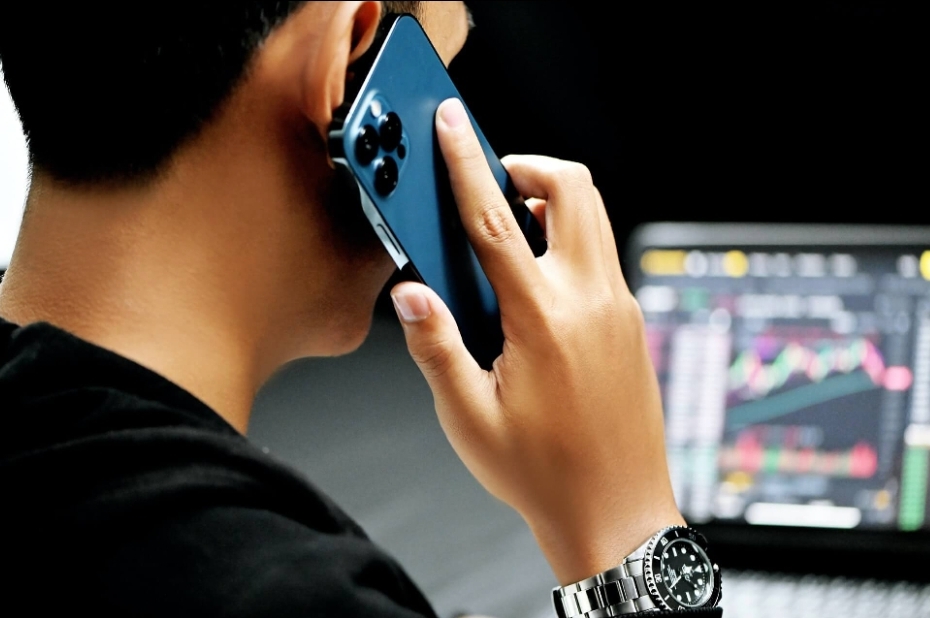
Forex trades can be made through futures, forwards, options, and currency swaps. They are used to protect against interest risk, speculate on future markets, and build a diverse portfolio. No matter what the reason is for your interest in Forex, if you want to become an efficient trader, take note of the strategies below.
Establish a trading methodology
Will you be a day trader, a position trader, or both? Day traders use the Forex market as a spot market, while position traders usually focus on long-term gains. Define goals for your trades that align with your personality and stress tolerance.
Control your emotions
Panic, anxiety, and rash decision-making are your worst enemies. Keep your emotions in check by focusing on self-awareness and empirical observation. A rational and analytical mindset will allow you to monitor and evaluate trades at an optimum level.
Use accessibility to your advantage
Nowadays, the combination of online trading platforms and mobile technology has made it incredibly easy to engage in Forex trades. Reliable service providers take most of the legwork out of trading, and brokers are always willing to help new traders find their feet.
Take the time to perform due diligence
Keep a personal record of all trades you make, and make use of both online and offline backups. Create daily and weekly charts of your performance, including buy and sell dates, forecasts, and predictions. Use time on the weekend for market analysis.
Focus on experience and knowledge
Lucky trades will only get you so far. You’ll need to learn how to read trends by gaining experience with currency fluctuation patterns. Practice expectancy calculations and use risk/reward ratios to your advantage. If you take the time to study all aspects of Forex trading properly, you will be able to make trades with confidence and a high degree of proficiency.