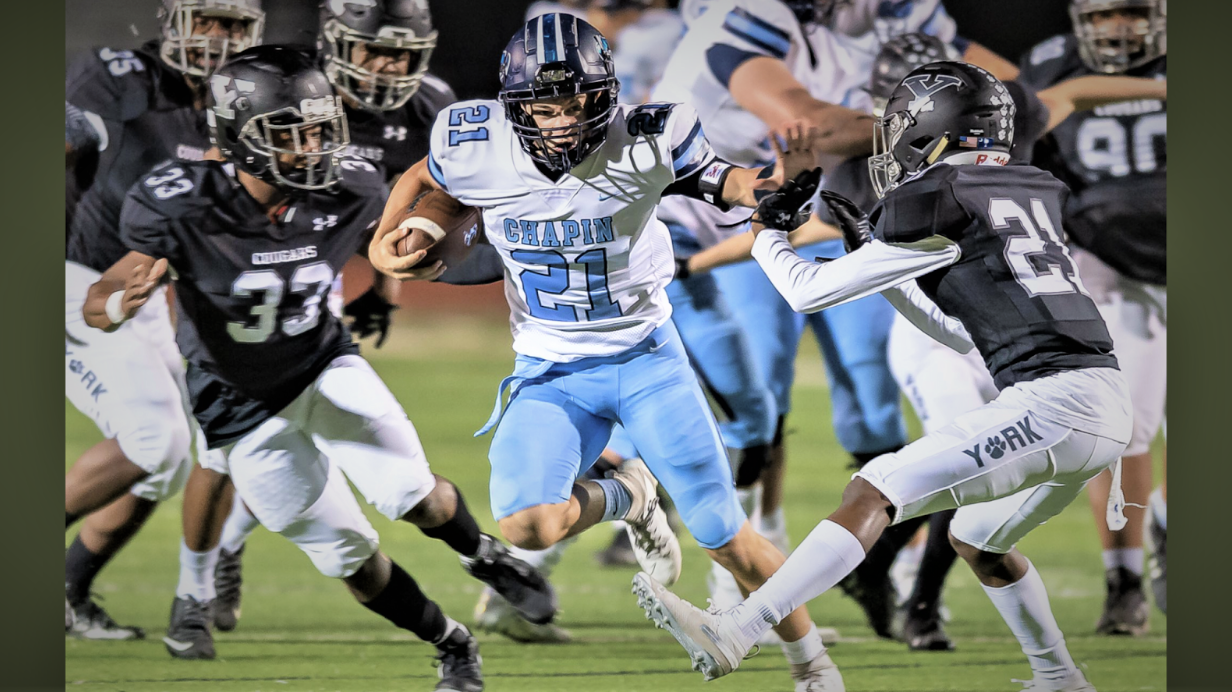
David Bennett Galloway III is used to racking up first downs. But it’s college football that’s moving the chains.
That’s because the sport is rapidly entering a new age of evolution. From the adoption of the forward pass in 1906 to the implementation of the air raid offense nearly a century later, college football has been no stranger to innovation.
Yet this new revolution isn’t happening on the gridiron. It’s occurring off the field.
However, David Bennett Galloway III has a unique perspective on the field. On the recruiting trail and on the sidelines, the freshman running back has already seen a shift in the sport. The Chapin-native racked up all kinds of yards and awards while in high school. These accomplishments earned him a spot with the Louisiana Monroe Warhawks of the Sun Belt Conference.
But, as he looks to build on this success, he isn’t looking toward the endzone. In fact, the points aren’t going on the scoreboard at all. They are being debated by coaches, athletic directors, and administrators across the country. This group is calling the plays going forward.
Although he isn’t a decision maker, David Bennett Galloway III does have a vested interest in the outcome. With this in mind, the running back rushes through three of the biggest trends that are redefining college football.
Conference Realignment
The rich get richer. In college football, there’s been a consolidation of power and wealth like any other. With just a couple of staggering departures, the entire landscape crumbled. First, Big 12 co-founders Texas and Oklahoma left for greener pastures with the SEC. Next, in a shocking move, USC and UCLA, both Pac-12 powerhouses, accepted invitations from the Big Ten. Both triggered a ripple effect throughout the sport, as other conferences looked to make corresponding moves and solidify their status.
College Football Playoff Expansion
Conferences aren’t the only parts of the game that are getting larger. The College Football Playoff’s board of managers voted unanimously to expand the field from four to 12 teams. At the latest, this will take effect in 2026, although some leaders are pushing for it as early as next season. While financial interests primarily drove this decision, this expansion may help stabilize conference realignment for the time being. The new format calls for automatic bids for the six major conference champions. This will help incentivize some schools to re-up with their current conferences.
Transfer Portal & NIL
Players like David Bennett Galloway III are also trying to regain some of their power. The NCAA’s “one-time” transfer has been a virtual free-for-all since it was adopted. It essentially opened “free agency” within college athletics. In response, the board is looking to institute transfer windows to minimize the volume and volatility of such transfers. Similarly, new court rulings regarding Name, Image, and Likeness (NIL) have enabled college athletes to generate revenue from their personal brands. Players have already capitalized (and cashed in) as the NCAA tries to play catch up.