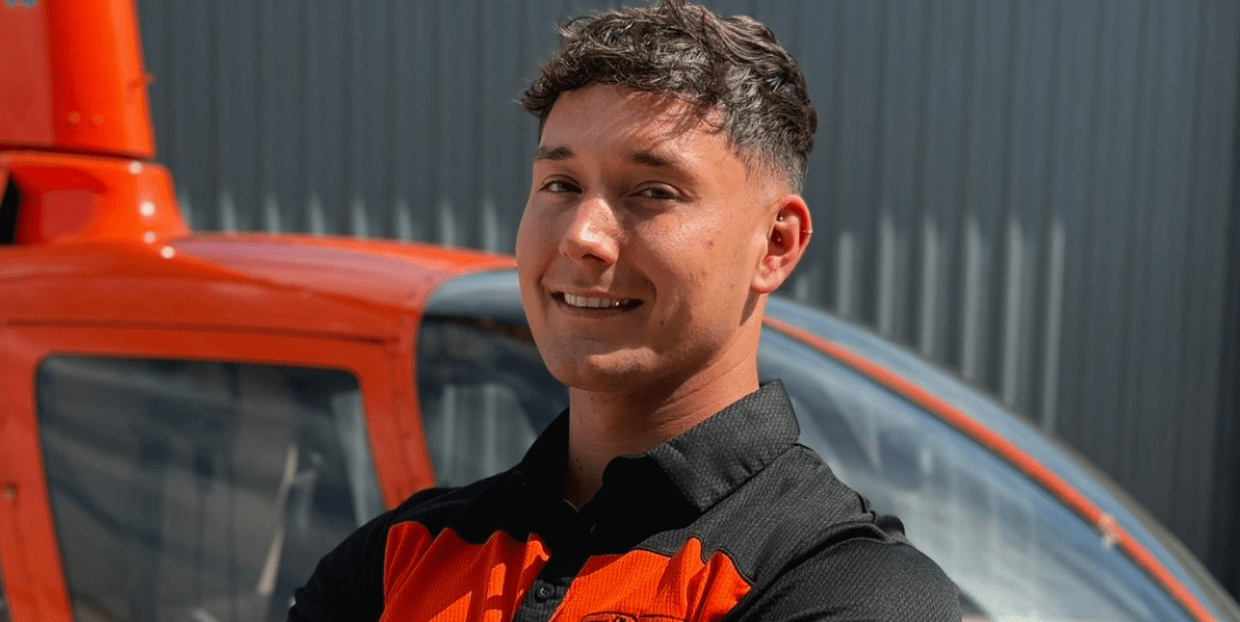
If you asked Tom Luca Schneider what dream job he wanted to see himself in, he’d tell you that he always wanted to be a pilot. His grandfather was a pilot, and a love for aviation was a common thread that ran through his family, generation after generation.
Roughly five years ago, Schneider began flight school, initially focusing on fixed-wing aircraft, but soon discovered that flying helicopters was where his real interests were. “I found my true passion,” he explains. “I truly believe destiny brought me to the helicopter industry because now I get to share my love for flying and training methods with others.”
Today, Schneider is a top-tier Certified Flight Instructor (CFI) for helicopter pilots and an FAA Safety Team (FAASTeam) representative, helping to shape safety regulations and modern flight instruction. His pioneering approach to flight instruction has made him a sought-after teacher for those seeking to take to the skies, and his focus on not only safety but also his modern approach to teaching is helping to create a new generation of professional helicopter pilots.
Contributing to modern flight training: New ways of learning to fly a helicopter
People choose to learn to fly a helicopter for a variety of reasons, whether it’s a lifelong passion for aviation (such as the one Schneider fostered), the desire to seek a more exciting career, or simply trying a new hobby on for size. As a CFI, Schneider helps students tap into their “why,” which he has found enhances student-instructor communication and students’ motivation.
Schneider sets himself apart from other CFIs by taking a holistic approach to instruction. While many instructors are skilled at teaching maneuvers, safety standards, and controls, they often overlook a key component in helping create a well-rounded, capable pilot: the person behind the controls.
“Today’s CFIs and FAASTeam members recognize the value in adopting a more holistic approach to teaching,” Schneider explains. As a CFI, Schneider carefully examines each student’s strengths, weaknesses, goals, and anxieties, taking each aspect into consideration when tailoring instruction. By recognizing these unique attributes in each student, training lessons for student pilots can be made more effective.
A love for lifelong learning in helicopter pilot training
“Even as a teacher, I see myself as a lifelong student,” says Schneider. With new technologies and approaches to instruction emerging year after year, Schneider relishes the ability to enhance his own flight education while bringing innovative teaching solutions to his role as a CFI.
CFIs are tasked with keeping their instruction consistently up-to-date to meet current standards and safety regulations. “We operate within a culture of perfectionism,” Schneider explains. “It helps keep our instruction sharp and adaptive.”
Schneider approaches each teaching opportunity with a mindset grounded in adaptability, humility, and openness to feedback. He hopes to instill in each student the idea that learning never stops, even after completing their required hours of flight time to obtain their pilot’s license and start flying solo.
Promoting safety in helicopter training
As a representative of the FAASTeam, Schneider contributes time and expertise to shaping safety regulations and resources for the aviation industry. It’s a role he takes seriously and one he believes is immensely influential to the industry and to every flight lesson.
“I actively promote safety culture beyond just my students, which reflects a broader commitment to the industry,” he says.
Through classes, workshops, resources, and digital tools, the FAASTeam not only promotes a culture of flight safety but also addresses important topics such as pilot mental health and continuous training, all of which contribute to creating safer, more capable career pilots.
Digital tools to help helicopter flight training programs
Today’s students are tech-savvy and accustomed to using social media platforms to communicate, learn, and connect with one another. Schneider acknowledges this reality and has built his approach to instruction around the way his digital native students learn.
“I have built a strong online presence to make learning to fly a helicopter more accessible,” Schneider says. He also sees the value of social media in inspiring current and future students.
Schneider understands that social media exposure can help bridge the gap between pilots and the public, allowing people with an interest in flying a helicopter to gain an insider’s look at what it’s like to be behind the controls.
A future of helicopter flying built on safety, holistic instruction, and trust
Students do not become safe, trustworthy pilots overnight, nor can they hone their skills through bookwork and flight hours in the cockpit alone. It takes dedication to safety and a commitment to lifelong learning to become a career aviator.
Instructors like Schneider, who take a more holistic approach to teaching, are helping shape the next generation of savvy, professional helicopter pilots, turning out career fliers who are passionate, skilled, and see safety as the ultimate goal each time they take to the skies.