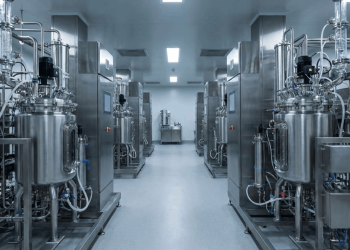
When you think about manufacturing, you might picture factories full of machines and assembly lines. But behind all of that is something more exciting: innovation. U.S. manufacturers aren’t just building industrial components – they’re pushing the boundaries of what’s possible. From cutting-edge technology to sustainable practices, these companies are leading the charge in making things smarter, faster, and greener. So, how are they doing it? Let’s take a closer look.
The Role of Technology in Innovation
If you’re wondering how industrial components have evolved over the years, technology is your answer. Think about it: not that long ago, we were relying on manual labor and simple machines. Today, it’s all about automation, AI, the Internet of Things (IoT), and even 3D printing. These technologies are reshaping the manufacturing world in real-time.
Automation, for example, allows manufacturers to produce components faster and more precisely. Machines that once required human intervention can now run on their own, improving productivity and reducing errors. And then there’s 3D printing – this is a game-changer for custom parts. Need a part that’s out of production or too complicated to make with traditional methods? 3D printing can handle it with ease.
These innovations don’t just make things faster; they make them smarter. The use of sensors and IoT allows manufacturers to monitor their equipment in real time, catching problems before they happen. It’s a level of precision and efficiency we’ve never seen before.
Research and Development (R&D) in U.S. Manufacturing
But technology alone doesn’t drive innovation – research and development (R&D) is where the magic happens. U.S. manufacturers are pouring money into R&D, and it’s paying off big time. Every time you hear about a new, improved industrial component, there’s usually a team of scientists and engineers behind it, testing, tweaking, and rethinking how things should work. For example, fasteners manufacturers in USA are using R&D to develop stronger, more reliable fasteners that can handle tougher conditions, meeting the growing demands across industries like construction and automotive.
Collaboration Between Industry and Academia
Here’s a fun thought: where do some of the best ideas in manufacturing come from? Often, they come from the classroom. The collaboration between industry and academia is a huge part of what’s driving innovation in the U.S. Manufacturing companies are teaming up with universities to tap into cutting-edge research and develop real-world solutions.
Why is this so important? Well, universities often have the resources to dive deep into complex problems that manufacturers can’t always tackle alone. They have the labs, the equipment, and the expertise to experiment with new ideas. When these academic findings meet the real-world needs of manufacturers, magic happens.
Sustainability and Environmental Impact
Another big trend in U.S. manufacturing? Sustainability. As climate change becomes an ever-more pressing issue, manufacturers are increasingly focusing on reducing their environmental footprint. But it’s not just about using less energy – it’s about innovating to create components that are both efficient and eco-friendly.
Some manufacturers are embracing renewable energy sources in their operations, while others are designing products that use fewer materials or are easier to recycle. Take electric vehicles (EVs), for instance – as the world shifts towards more sustainable transportation, the components that go into EVs need to be lighter, more efficient, and longer-lasting. Manufacturers are meeting this challenge head-on, redesigning batteries, motors, and chassis for better performance and sustainability.
It’s a win-win: innovation leads to more efficient production processes, which in turn help protect the planet. And as consumers become more environmentally conscious, manufacturers are meeting that demand with green products and sustainable practices.
The Workforce: Training and Skill Development
We can’t forget about the workforce behind all these innovations. The skills required to design, build, and manage new technologies are changing rapidly. So, how are manufacturers keeping up? By investing in training and skill development.
It’s not enough to just hire someone with a degree – manufacturers need people who are ready to handle the challenges of a tech-driven world. That’s why many companies are partnering with vocational schools, offering apprenticeships, and even running their own internal training programs. This ensures that their employees are constantly learning and adapting to new technologies.
Why does this matter? Well, it’s the people who make the technology work. A skilled workforce can take new ideas and bring them to life, ensuring that innovation doesn’t just remain on paper.
Challenges Faced by U.S. Manufacturers
Of course, innovation doesn’t come without its challenges. U.S. manufacturers face a range of obstacles, from supply chain disruptions to rising production costs. But that’s what makes them so resilient.
Take the COVID-19 pandemic, for instance – it disrupted global supply chains and made it difficult to source components. But rather than throw in the towel, manufacturers adapted, finding new suppliers, improving their processes, and even reshoring production to reduce their reliance on overseas manufacturers.
It’s this adaptability that keeps U.S. manufacturers competitive. While there may be challenges, they’re constantly working to solve them through innovation and smart problem-solving.
The Future of Innovation in U.S. Manufacturing
So, what’s next? Where is U.S. manufacturing headed in the future? As technologies like AI and machine learning continue to evolve, we can expect even smarter manufacturing processes. Think about machines that can not only fix themselves but also optimize their performance based on real-time data. Sounds like something out of a sci-fi movie, right?
But the truth is, this kind of innovation is closer than you might think. Manufacturers are already experimenting with predictive maintenance, where machines alert operators before they break down, saving time and money. The future is all about making manufacturing more intelligent and efficient, with even less human intervention.
The government, too, plays a role in fostering innovation. Policies that support research, provide tax incentives, and promote the development of new technologies will continue to be crucial in keeping U.S. manufacturing at the cutting edge.
Conclusion
Innovation in U.S. manufacturing isn’t just a buzzword – it’s a driving force behind the industry’s evolution. From advanced technologies and sustainable practices to ongoing R&D and workforce development, U.S. manufacturers are pushing boundaries and shaping the future of industrial components. So, next time you think about the components that power our machines and products, remember: there’s a lot more happening behind the scenes than you might realize. The future is bright, and it’s all being built right here.