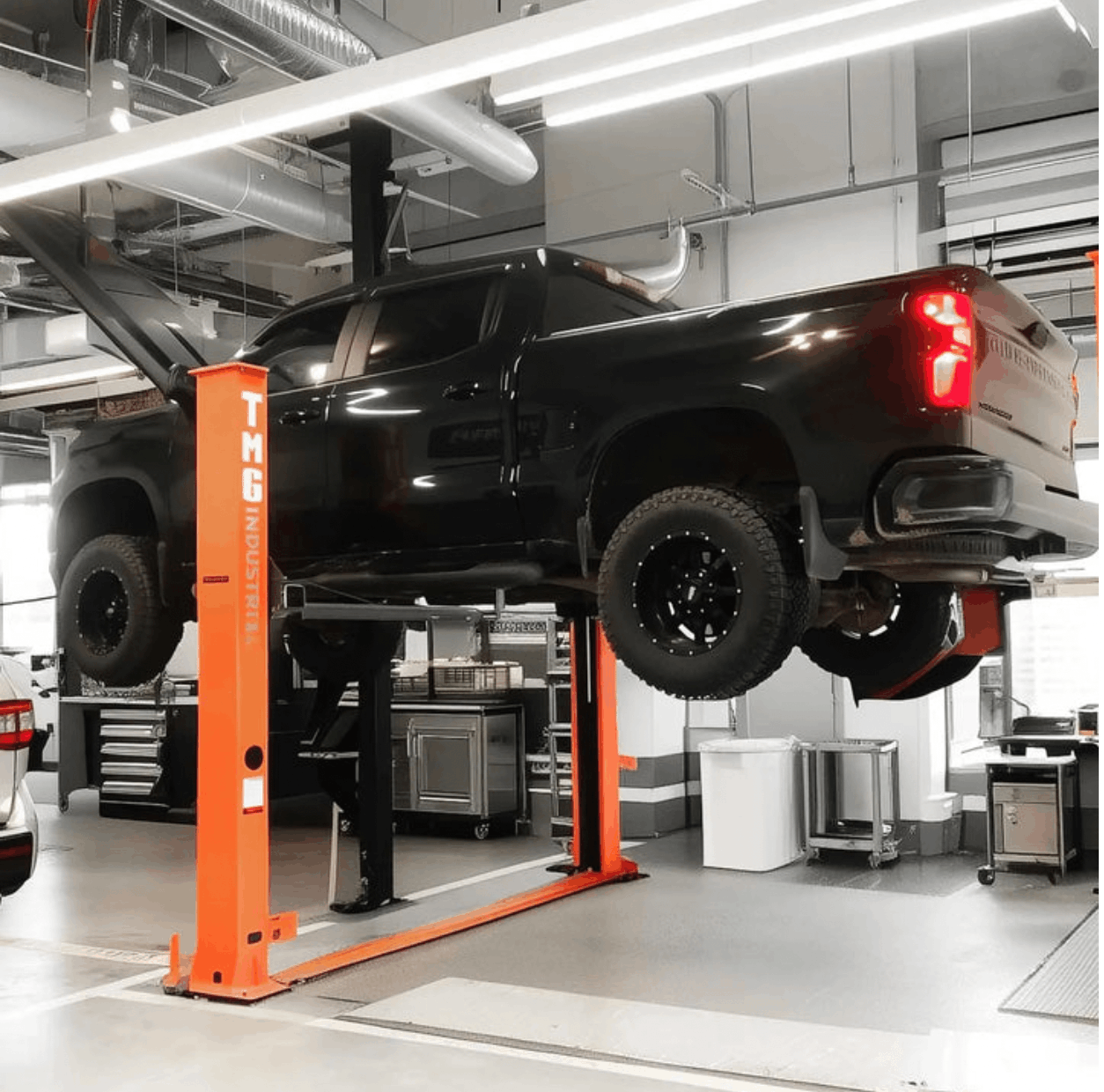
Walk into almost any modern repair shop and one piece of equipment tends to dominate the room: a vehicle raised overhead on a pair of steel columns, with a technician working in comfort beneath it. That is the two-post auto lift, and over the past few decades it has become one of the most familiar fixtures in automotive service. The appeal is simple. It lifts an entire vehicle clear of the floor so the underside, wheels, and suspension are all within easy reach, without the strain of working under a car on a creeper.
What It Actually Does
A two-post lift does roughly what the name promises. Two upright columns stand about a vehicle’s width apart, and each carries arms that swing in beneath the chassis. The arms end in rubber pads that meet the car at points the manufacturer has designated for lifting, usually reinforced spots along the frame. When the lift rises, the whole vehicle goes with it and the wheels hang free. That is the difference from a drive-on four-post lift, which supports a car by its tires; with the wheels unsupported, the brakes, suspension, and tires are all open to work on.
How It Lifts
The lifting is hydraulic. A cylinder at each column, or one linked across to both, drives the carriages up the posts, while an equalization cable or chain ties the two sides together so they climb at the same rate and the load stays level. Just as important are the mechanical safety locks. As the carriages rise, spring-loaded latches drop into notches spaced along the columns. At working height the operator settles the load slightly onto the nearest locks, so it rests on solid steel rather than oil pressure alone.
Reading the Arms
Much of the skill in using one lives in the arms. They telescope in and out and swing on pivots, so a single lift can take everything from a low sports car to a tall work truck, and stackable pads raise the contact point to reach higher frames. Setting the arms square and secure on the right points is the difference between a routine job and a vehicle that shifts on the pads.
Floor-Plate and Overhead Designs
Two-post lifts come in a few configurations. Symmetric models set the columns directly opposite; asymmetric versions rotate them slightly so car doors open more easily once the vehicle is up. The more visible distinction is how a lift routes its hydraulic lines and cables. Overhead designs carry them across a bar joining the tops of the columns; a two-post floor-plate lift instead runs them through a low cover plate set into the floor between the posts. Keeping that hardware low leaves the space above the vehicle clear, which matters under low ceilings or when a raised hood needs room overhead.
Where They Earn Their Keep
The format suits a broad range of users. Independent garages, dealerships, tire and exhaust shops, and fleet bays all treat two-post lifts as everyday workhorses, and many home mechanics own one as well. The first reason is access: with nothing beneath the car but the arms, nearly the whole underside is exposed at standing height. The second is space. A two-post lift takes up less floor than a four-post system and is generally simpler and cheaper to install.
Operating One Safely
Using one safely comes down to a few fundamentals, though what follows is general and never a substitute for the manufacturer’s instructions or the judgment of a qualified installer. The vehicle’s weight has to stay within the lift’s rating, and the load should be balanced rather than nose- or tail-heavy. The arms must sit on the correct lifting points, or the car can slip. The safety locks should be engaged before anyone steps underneath. And the lift is only as sound as the floor beneath it: a level, properly anchored concrete slab, because the columns funnel the entire load into it. Many regions also require shop lifts to be inspected on a schedule.
None of this is especially glamorous, which is rather the point. The two-post lift has endured because it balances the three things a working shop cares about: full access to the vehicle, a small footprint, and a sensible cost. Like the best automotive shop equipment, it is not flashy – just a dependable fixture that fades into the background while the real work goes on above it.