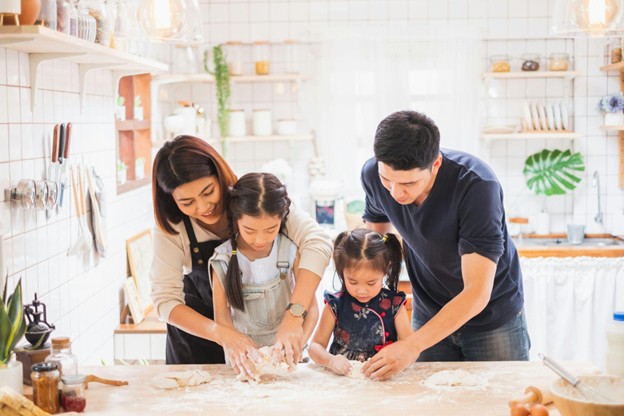
Janine Yorio, a stay-at-home mom and food blogger, has long believed that the most meaningful moments occur in the ordinary rhythm of the kitchen, where the day slows down just enough for conversation to begin. Hands are busy and defenses lower as children share and engage more than they do when the dinner table is set.
The kitchen, for many, is a gathering place that shapes habits, confidence, and connection. Yorio begins and ends her cooking experiences with children, understanding that they do not need to be entertained in the kitchen. They’re ready to become part of the dinner-making processes and rituals.
When children are invited into the kitchen space as contributors, even in the smallest ways, the meal is something shared as opposed to something delivered. The shift in grownups affects the way the children under their care think about food responsibility and family routine.
Today’s family homes see quick-moving schedules and fragmented evening hours. Inviting children into the kitchen offers a grounding experience that turns meal preparation into moments of togetherness and collaboration, laying the groundwork for meaningful conversation and connectedness.
Why the Kitchen Becomes a Natural Gathering Place
When a child’s hands are occupied, they often find it easier to open up and engage. Stirring batter, washing berries, or arranging vegetables on a sheet pan creates an ease that direct questions sometimes cannot.
“The kitchen gives children a way to participate while also feeling close,” Janine Yorio says. “Some of our best conversations happen while we are chopping, stirring, and moving through dinner together.”
That natural closeness matters. Cooking side by side reduces the pressure that can come with more formal conversations. Parents hear about a hard moment at school, a friendship issue, or an exciting idea for the weekend almost incidentally, woven into the rhythm of preparing food.
The kitchen also gives children a sense of belonging as they are contributing to meaningful meal prep instead of waiting for a meal to appear on the table.
Starting With Age-Appropriate Roles
Success in the kitchen with kids often begins by matching age-appropriate tasks to confidence level. Younger children can rinse vegetables, tear lettuce, stir dry ingredients, or even help place toppings on dishes like pizza. Older children with more dexterity and attention to detail may measure ingredients, crack eggs, chop soft foods with supervision, or learn simple stovetop skills.
Involving children is rarely more efficient, but that was never the goal Yorio had in mind. The engagement, connection, and opportunities cooking with children creates is something more valuable than speed.
Children build familiarity with ingredients, develop fine motor skills, and gain confidence through repeated participation. A child who once sprinkled cheese on a casserole eventually learns how to assemble the entire dish. Yorio leans into gradual responsibility with each new task, building naturally from the last.
Building Healthy Relationships with Food Early
Cooking with children shapes how they relate to food itself. Children who help make meals frequently show greater curiosity about ingredients. They become more willing to try vegetables they helped wash, season, or roast. Food stops being abstract and becomes something they understand from the beginning.
“Children are much more open to trying foods they helped prepare. The process gives them a sense of ownership,” says Yorio.
Ownership can be especially valuable with selective eaters. Instead of pressuring children to eat unfamiliar foods, involving them in preparation reduces resistance organically.
When children see raw ingredients transform into something warm and familiar, the meal feels less intimidating.
The Kitchen as a Classroom for Life Skills
The kitchen quietly teaches lessons that surpass skill-building with food. Measuring ingredients introduces math, while following specific instructions reinforces sequencing and attention. Waiting for something to bake teaches patience.
Planning a meal also introduces organization and time management. Children begin to understand that dinner involves preparation, coordination, and follow-through. These are foundational life skills presented in a highly practical setting. Yorio is quick to point out that cooking together is one of the most natural ways to teach independence.
A child who learns how to assemble a typical breakfast or prepare a simple lunch gains confidence that carries into other parts of life. The lessons transcend the culinary and become developmental.
Creating Rituals Around Cooking Together
Children thrive on routine and ritual, and family cooking traditions regularly become some of the most lasting memories from childhood. Pizza Fridays, pancake Sundays, taco Tuesdays, holiday baking weekends, or after-school smoothie routines all create familiarity and emotional security.
These repeated moments become markers of family identity. Rituals need not be elaborate, as it is the repetition itself that matters.
“Kids remember the feeling of those moments,” Yorio notes. “They remember being included.”
That feeling of inclusion becomes part of how children define home. Years later, they may not remember the exact recipe, but they will remember standing on a stool at the counter, helping stir cookie dough while talking about their day.
Letting the Kitchen Be Imperfect
Yorio’s approach to integrating children into the kitchen rests on resisting the urge to create a polished, perfect experience. Cooking with children is inherently messy as flour spills, eggs crack unevenly, and batter drips down cabinet doors.
Yorio is emphatic that the point is never precision. Parents who approach the kitchen as a controlled space will find it harder to include children. Instead, encouraging families to see the mess as part of the memory can minimize the effect of natural, minor disruptions.
Perfection rarely creates connection, but participation absolutely does, and that teaches children resilience. Mistakes become part of learning as opposed to something to fear. Burnt toast, too much cinnamon, or slightly lopsided cookies become stories the family retells.
Helping Children Grow into the Kitchen
One of the most rewarding parts of family cooking is watching responsibilities stretch and evolve over time. A child who once washed strawberries may later learn how to make scrambled eggs, prepare pasta, or assemble a simple stir-fry. With each stage, confidence grows.
Yorio sees this as one of the most meaningful long-term benefits of involving children early. They begin to understand food as something they can create, fostering independence and an early understanding of how to nourish themselves.
Cooking as a Family Legacy
The long-term value of cooking with kids is really lifelong. Children who are raised in kitchens where they’ve been welcomed into the process of meal prep and the resulting cleanup carry those habits into adulthood.
They grow up understanding ingredients, appreciating home-cooked meals, and viewing food as a source of connection. More importantly, they carry forward the emotional memory of shared time.
The kitchen becomes part of the family’s legacy, a place where meals, conversation, laughter, and life skills are all built together. For Janine Yorio, that is the heart and soul of family cooking.
The bonds built for the family, even sitting down at the table, create confidence, trust, and rhythm that lead to a sense of belonging. The kitchens of today, when evenings move so quickly and time together is sparse, offer a meaningful place where families can come together once more.