We live in a business era where startups are often measured by how fast they can grow their headcount, as if team size directly reflects a new business’s success. However, men’s clothing brand HAUS is making the case for another model: deliberate, focused scaling and technology that lets a smaller team make an outsized impact.
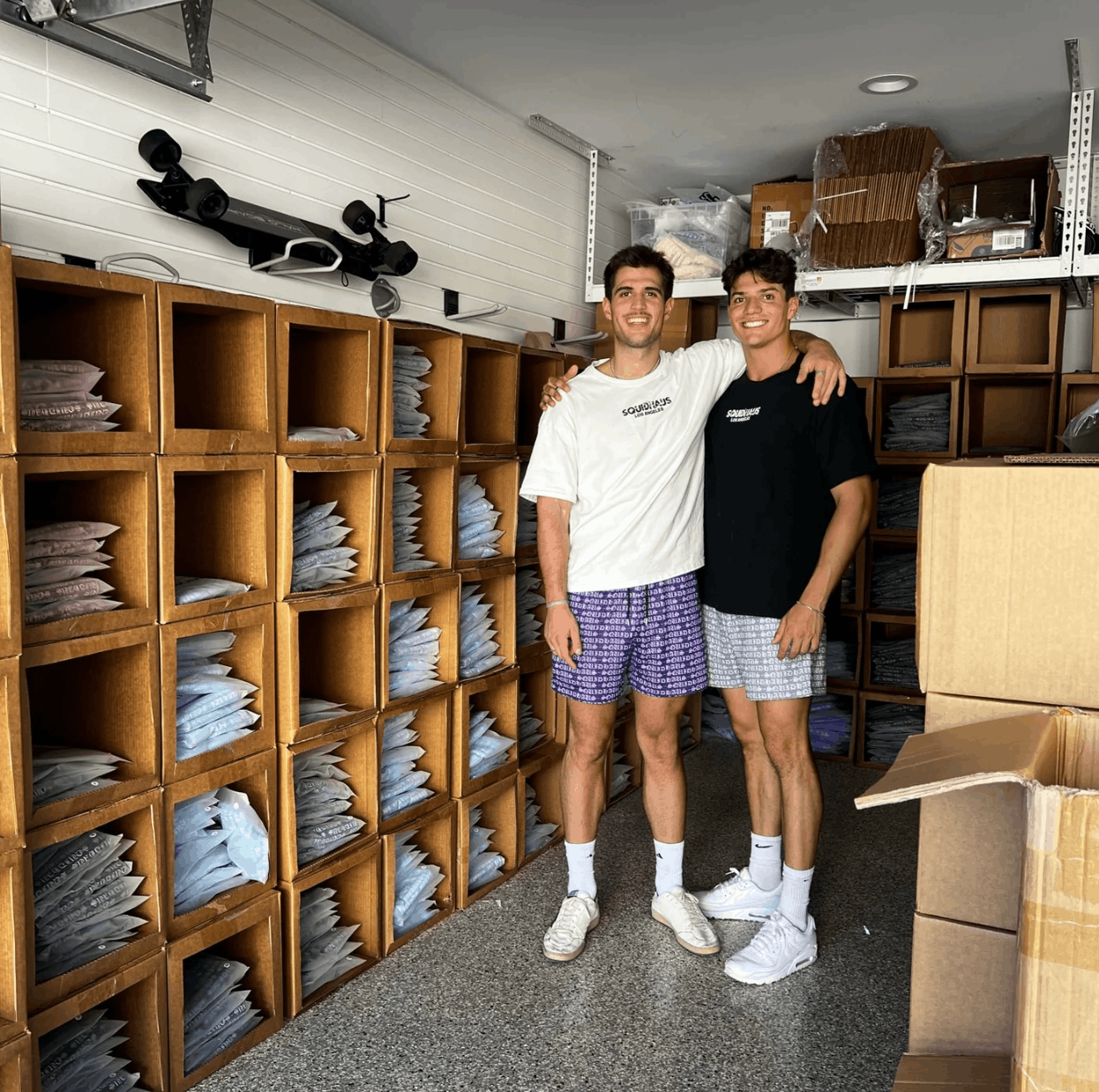
The direct-to-consumer men’s performance apparel brand’s humble beginnings in a garage, started by cousins and co-founders Troy Parrott and Lukas Pakter, began as a way for the two entrepreneurs to sell workout shorts to their college friends and people in their direct gym community. As the brand rapidly outgrew the confines of their garage and added items such as fitness tops, activewear pants, tees, tanks, and accessories, they focused on hiring good people, making great products, and keeping things simple, even as their community and customer base expanded.
Focus on greatness beats expansion for expansion’s sake
For Parrott and Pakter, their approach with HAUS meant resisting the temptation to grow the company’s internal complexity simply as the business itself grew. As they used online engagement sources such as TikTok to build a fanbase for the brand’s training clothing, lifestyle wear, and men’s accessories lines, they stayed focused on keeping their team small but intentional.
“Before, to run a brand our size, you would need probably 40-50 full-time people,” Parrott explains. “But nowadays, people are running nine-figure brands with a couple of full-time people, a handful of contractors, and leveraging technology and AI.”
This shift in the marketplace has important implications for entrepreneurs like Parrott and Pakter, who may feel pressured to build large teams as a mark of success before they have strong systems in place. HAUS has succeeded in doing more with less by not overloading its team. For the founders, it’s all about being intentional by identifying which work truly needs the influence of human judgment, investing in capable people, and designing processes that remove friction.
The pursuit of progress
The focus on intentional growth fits the larger HAUS brand strategy. The brand positions itself around the pursuit of progress through the ongoing process of confronting challenges, improving over time, and pursuing the space where pressure meets ability. This mission reflects the brand’s core audience of people who train hard, move, rest, and stay consistent in preparing themselves to meet the next challenge. HAUS isn’t a brand trying to be everything to everyone, but rather built for those who are constantly striving for perfection and personal growth.
For Parrott and Pakter, the narrow product strategy they have created has allowed them to create room for better decision-making and more meaningful growth. Instead of spreading a large team across multiple launches, campaigns, and categories, they have developed a deep devotion to product quality and customer responsiveness.
“We try to only hire for things we absolutely need,” says Pakter. “Our product catalog is intentional and curated, so we have a small design team that only pumps out products we think will do well. We don’t try to break into every market right away. For marketing, we only hire people who will genuinely have an impact on either a brand or its sales. At the moment, anything else is irrelevant and probably not needed.”
Technology allows for systems that support a lean team
HAUS’s approach to having a small team with a big impact is aided by technology. The company utilizes AI as a tool to reduce manual work and enable a smaller number of people to produce at a much larger scale.
Pakter points to the company’s user-generated content program as one example. “Our entire UGC program that pumps out 8,000-plus ads per month currently only has two people running it,” he says. “Most brands our size have a dozen people in the marketing department.”
The same mindset is applied to operations. By eliminating the layers of retail or wholesale distribution, HAUS can concentrate fully on the direct-to-consumer platform it has had from the beginning. According to Pakter, one operations team member oversees the function while building AI-supported systems that reduce friction and simplify routine processes.
“If an employee doesn’t know how to leverage AI, they probably shouldn’t work with us,” he says.
For HAUS’s co-founders, it’s not about replacing people but redefining what high-value work looks like. The human contribution becomes strategic and focused on work that technology simply cannot replicate.
A garage-born brand with purpose
From its beginnings in a garage stocked with products to becoming a multi-million-dollar clothing brand, HAUS has maintained the same operating philosophy of doing more with less. The community-oriented performance clothing brand remains grounded in a mission of progress from repetition, resilience, and continued learning.
Businesses looking to scale without losing focus on who they are at their core would be well served to look to HAUS as an example. Growth doesn’t have to mean more layers or complexity. It can be as simple as giving a lean yet high-performing team the tools they need to do the work and do it well.